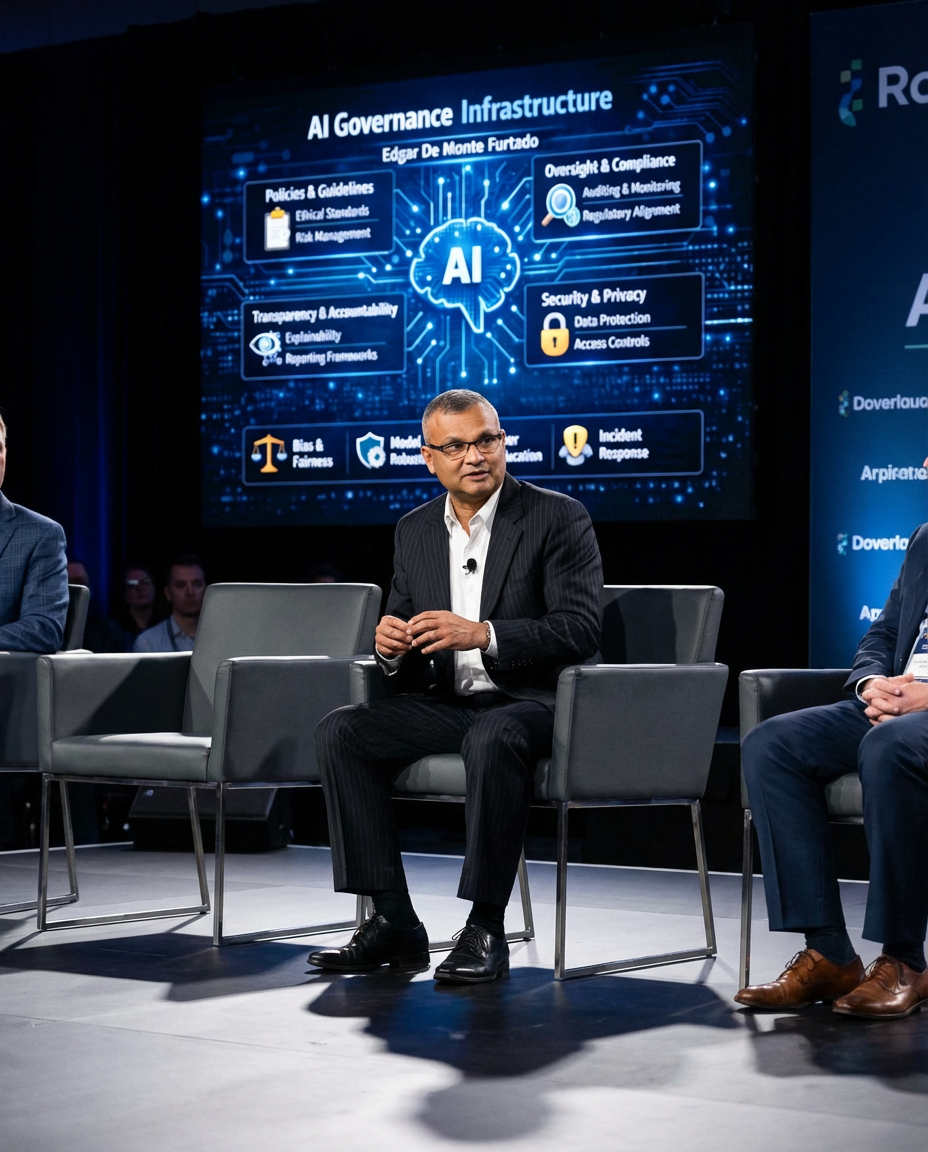
Authority Strip
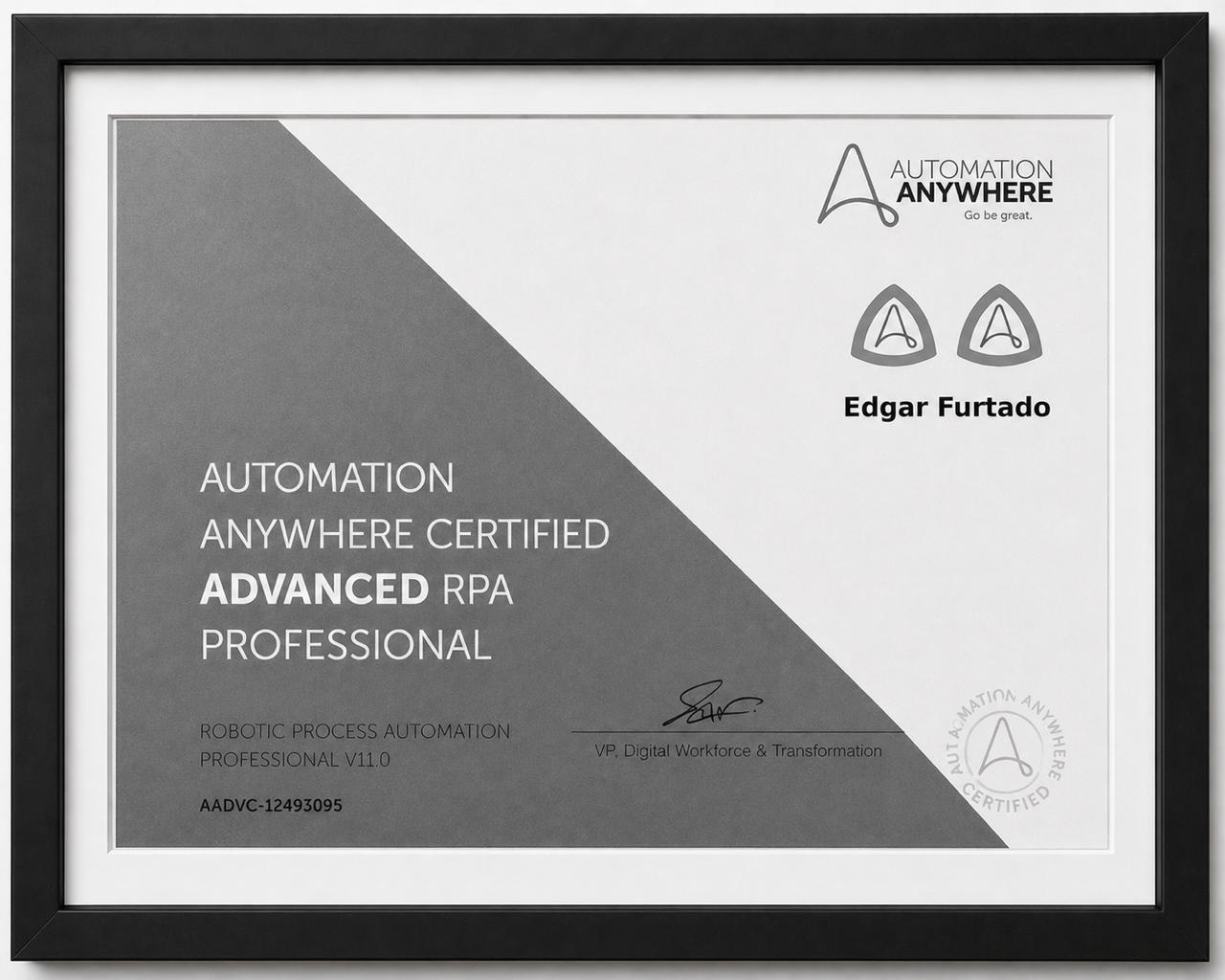
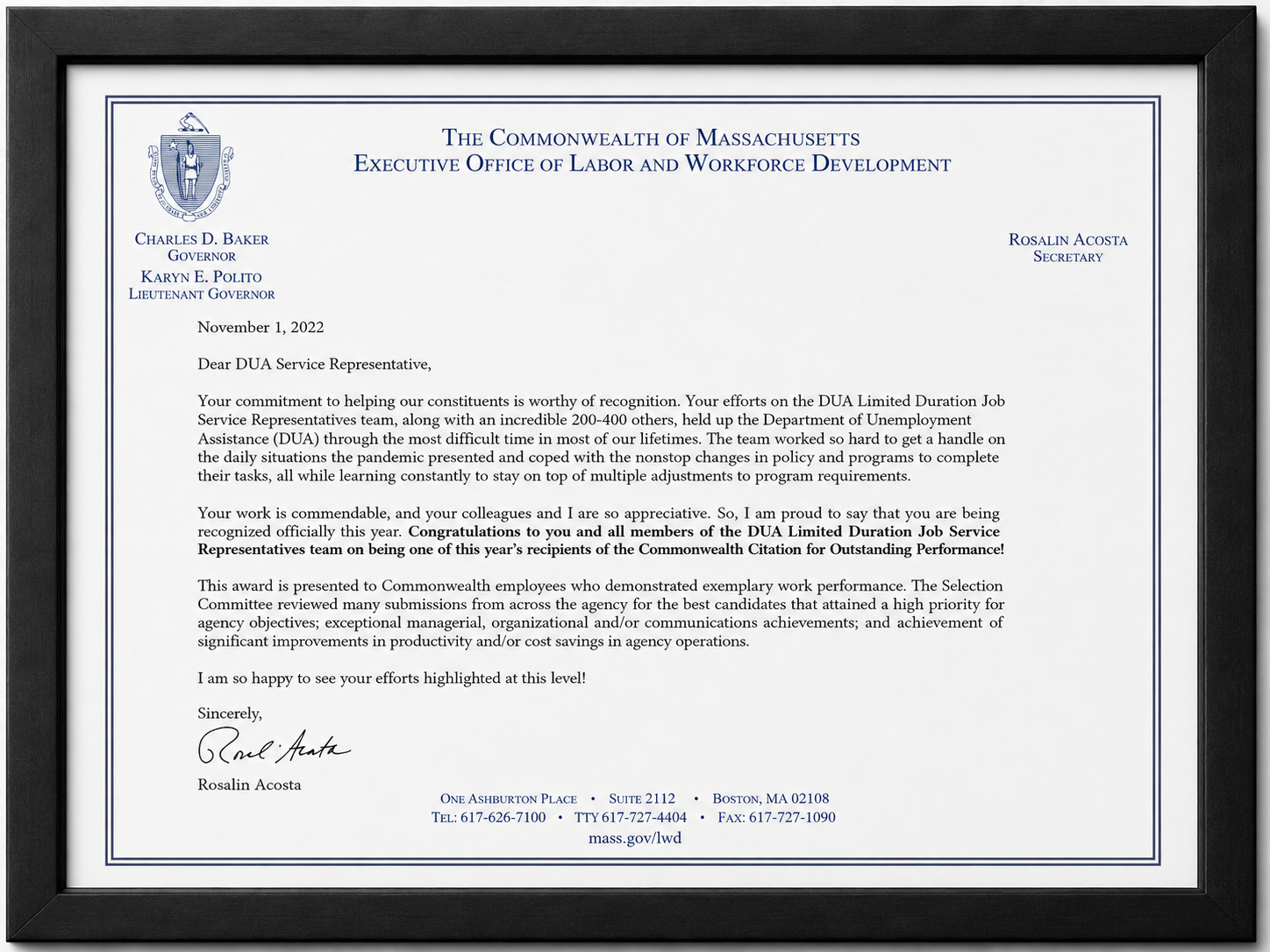
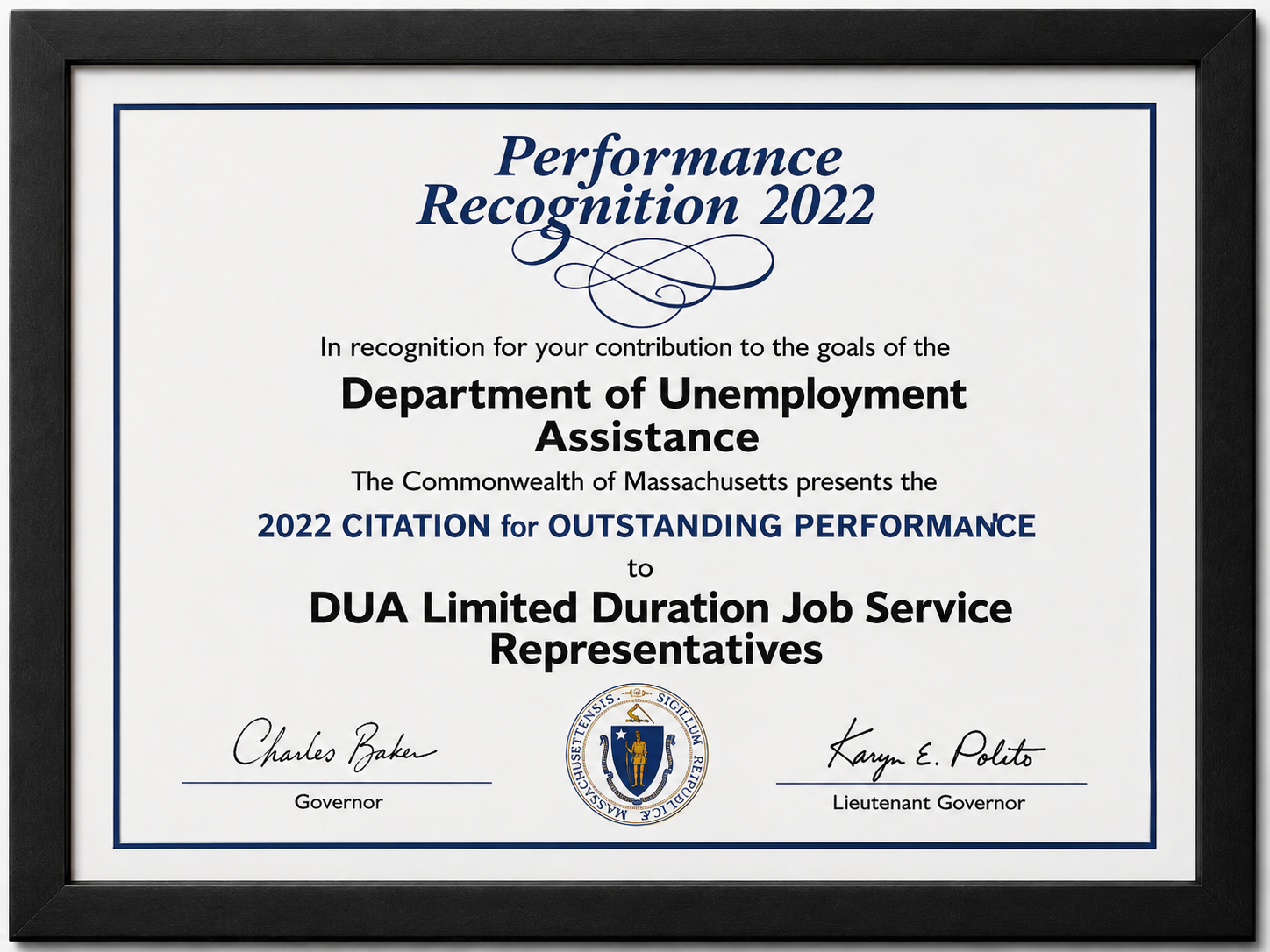
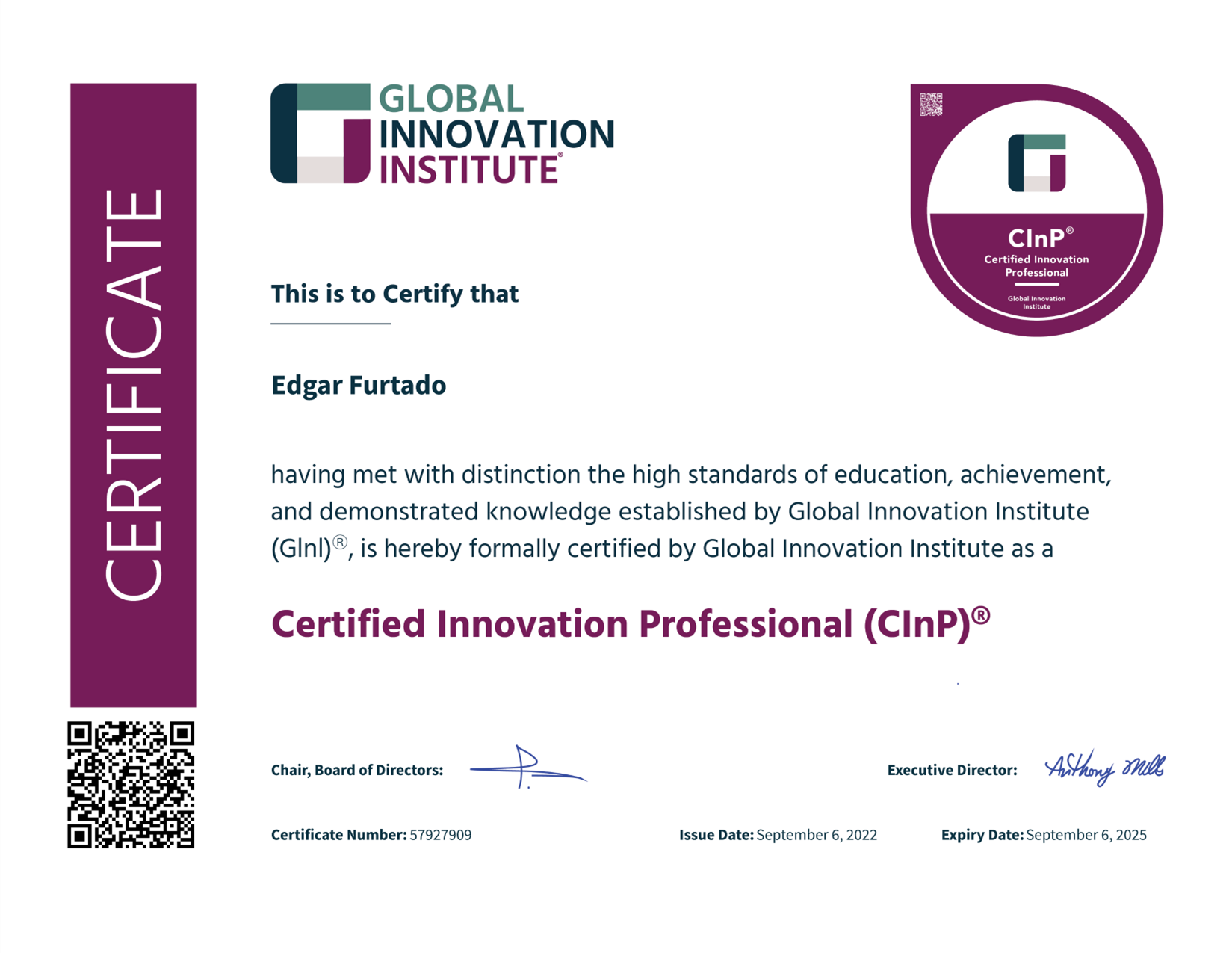
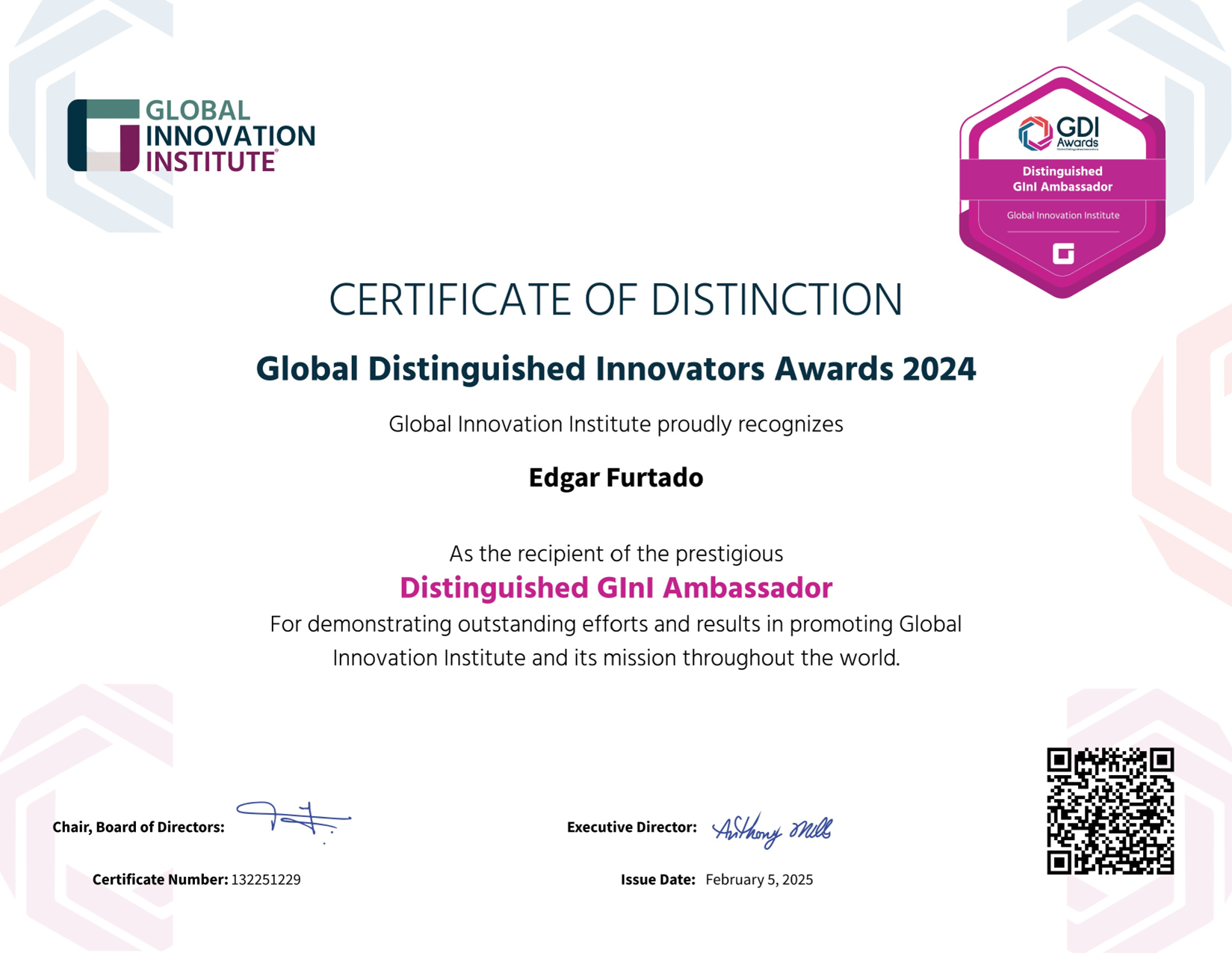
- Awarded Global Distinguished Innovators Award through Global Innovation Institute — GInI.
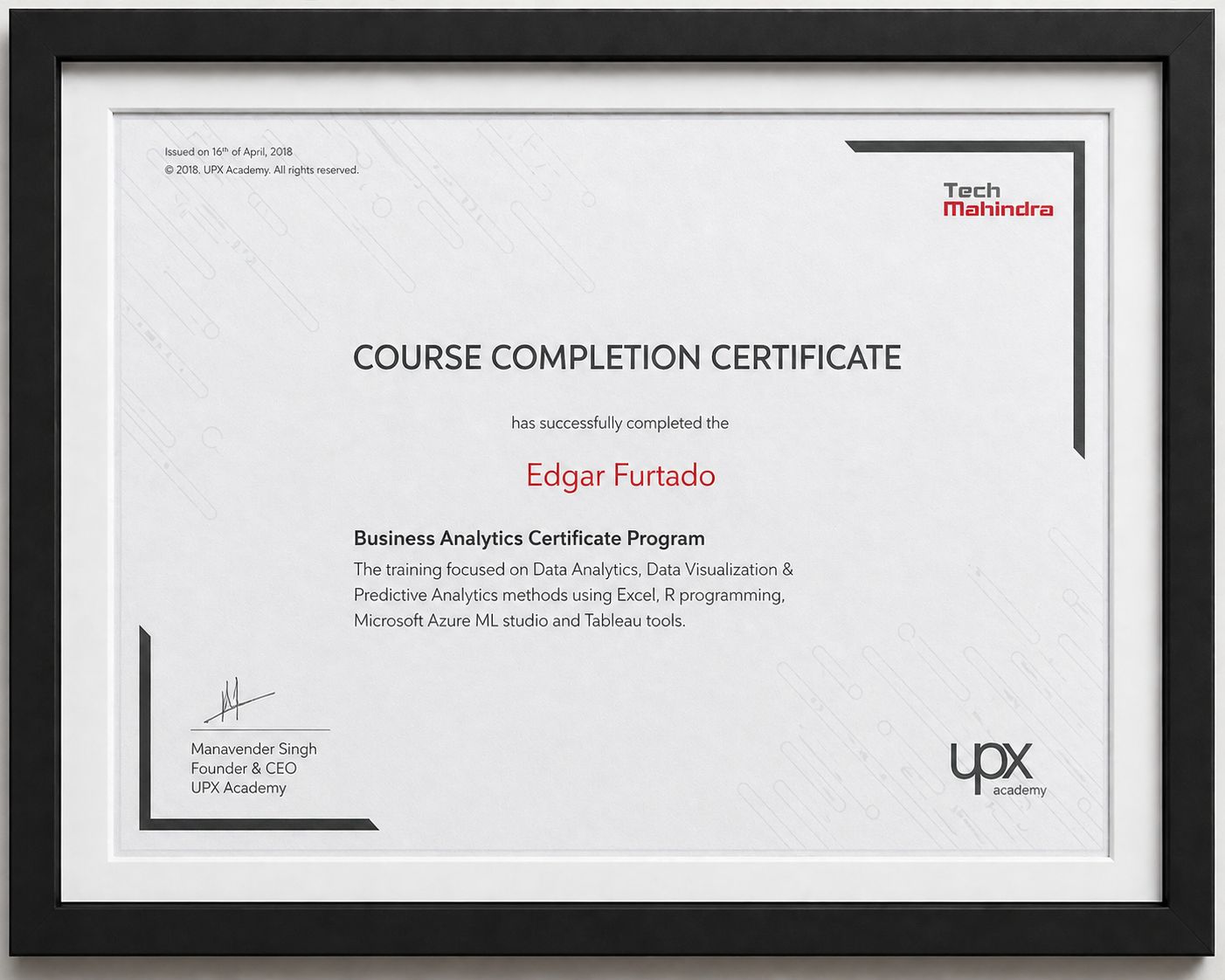
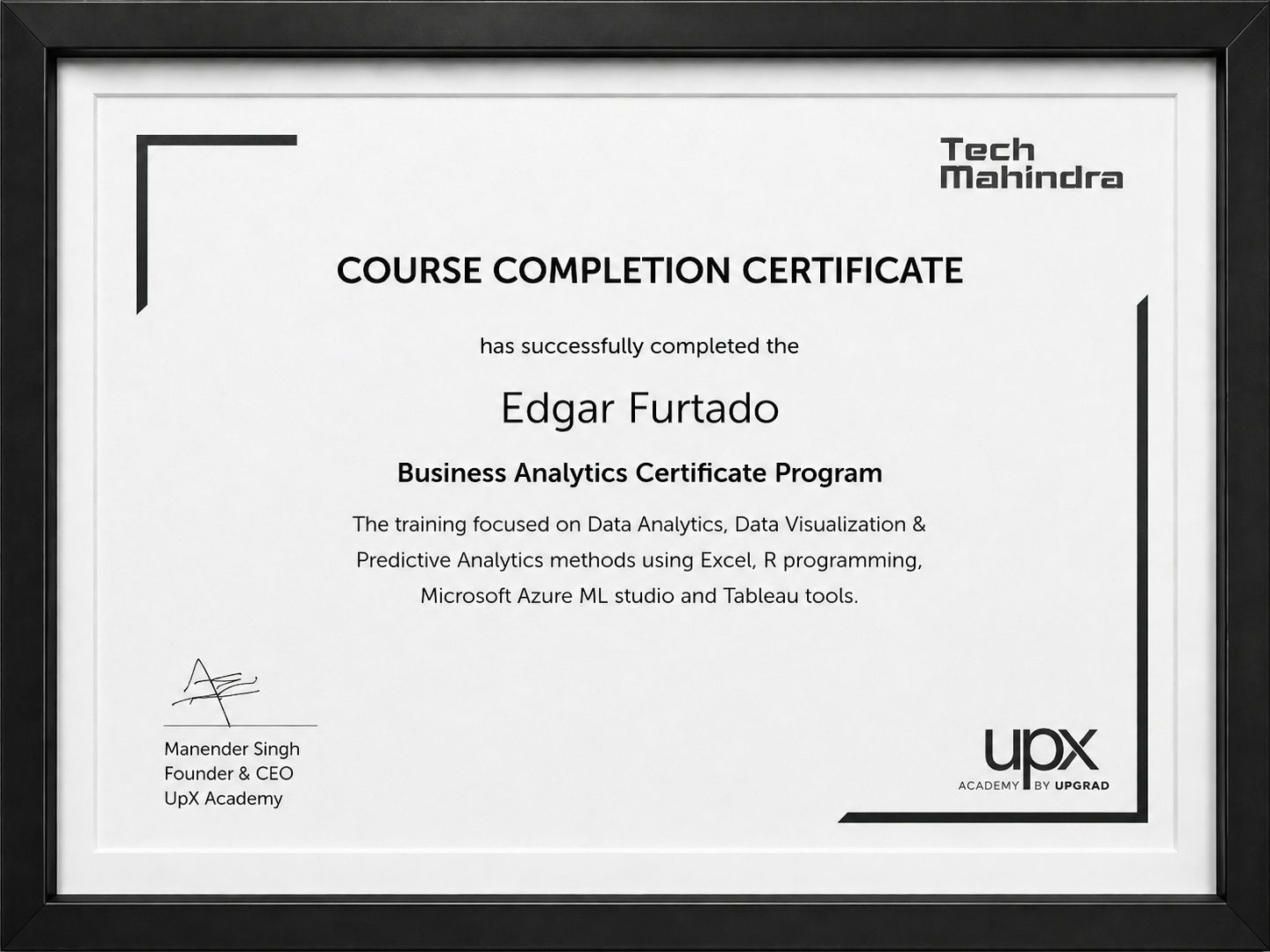
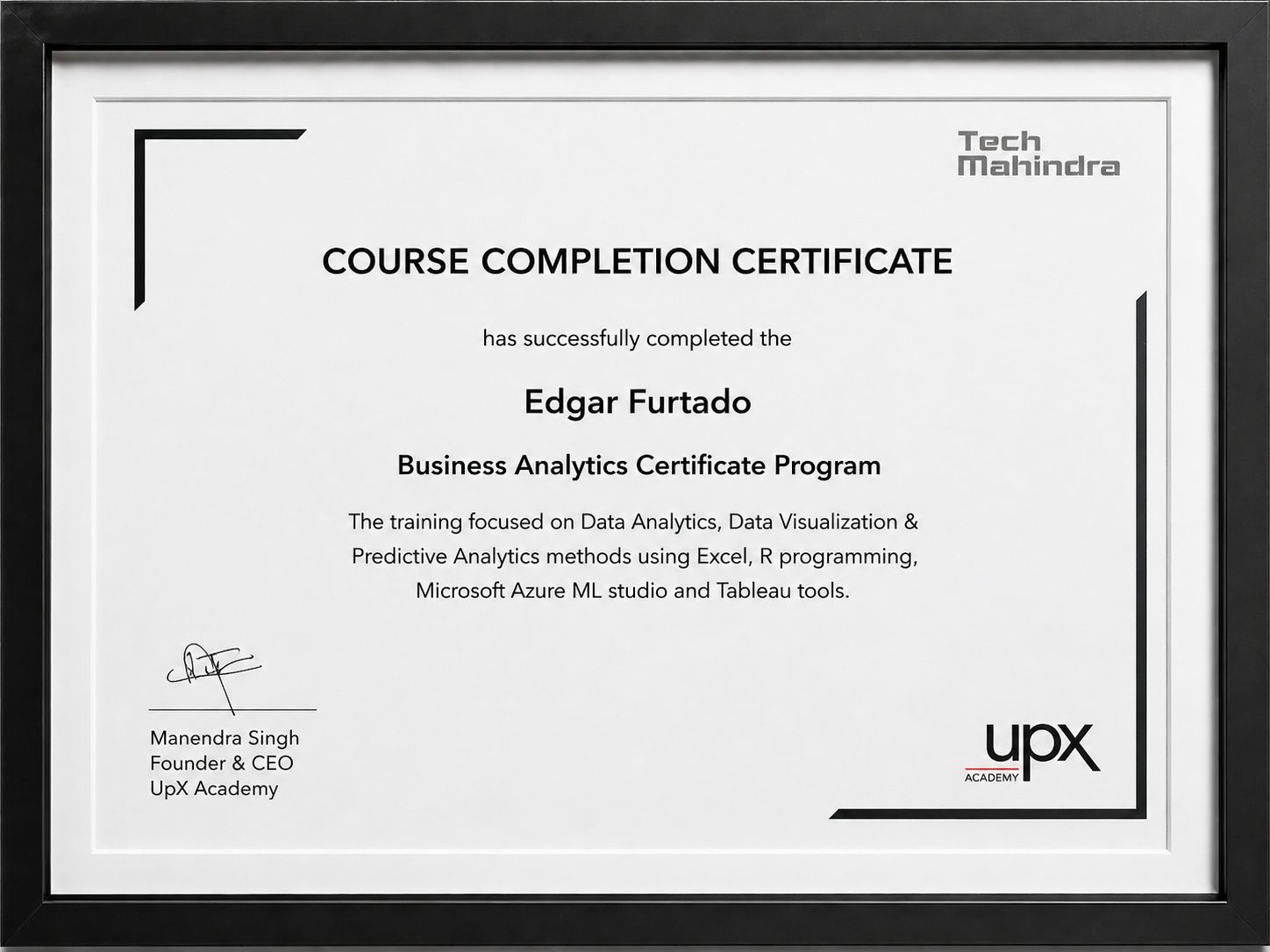
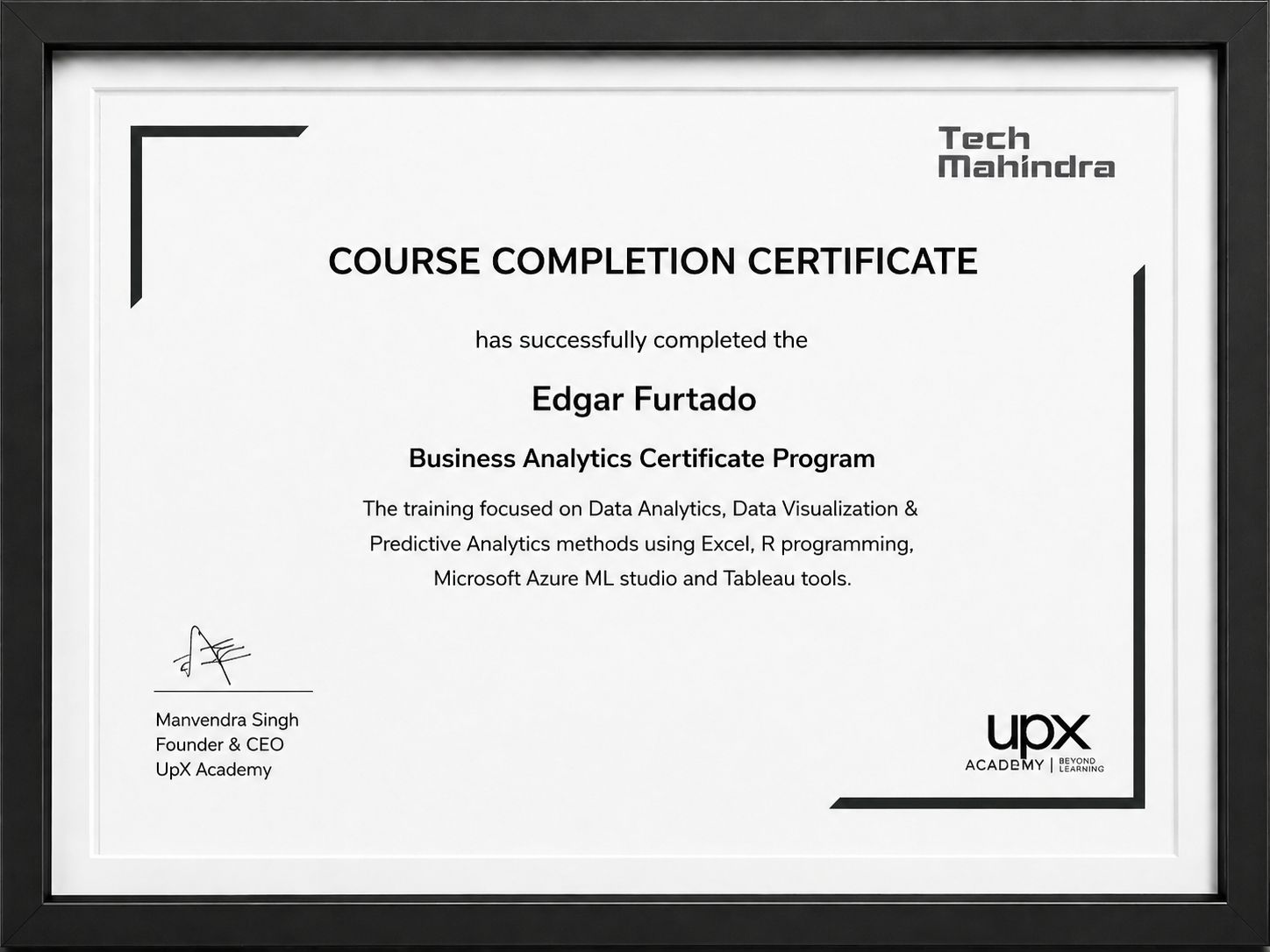
- Over two decades of experience in Business Analytics services, Innovation, Entrepreneurship, Project Management, and Industry 4.0 Data Sciences services.
- AI-driven innovation leader with 25+ years promoting sustainable ecosystems, circular economy campaigns, and agentic AI solutions.
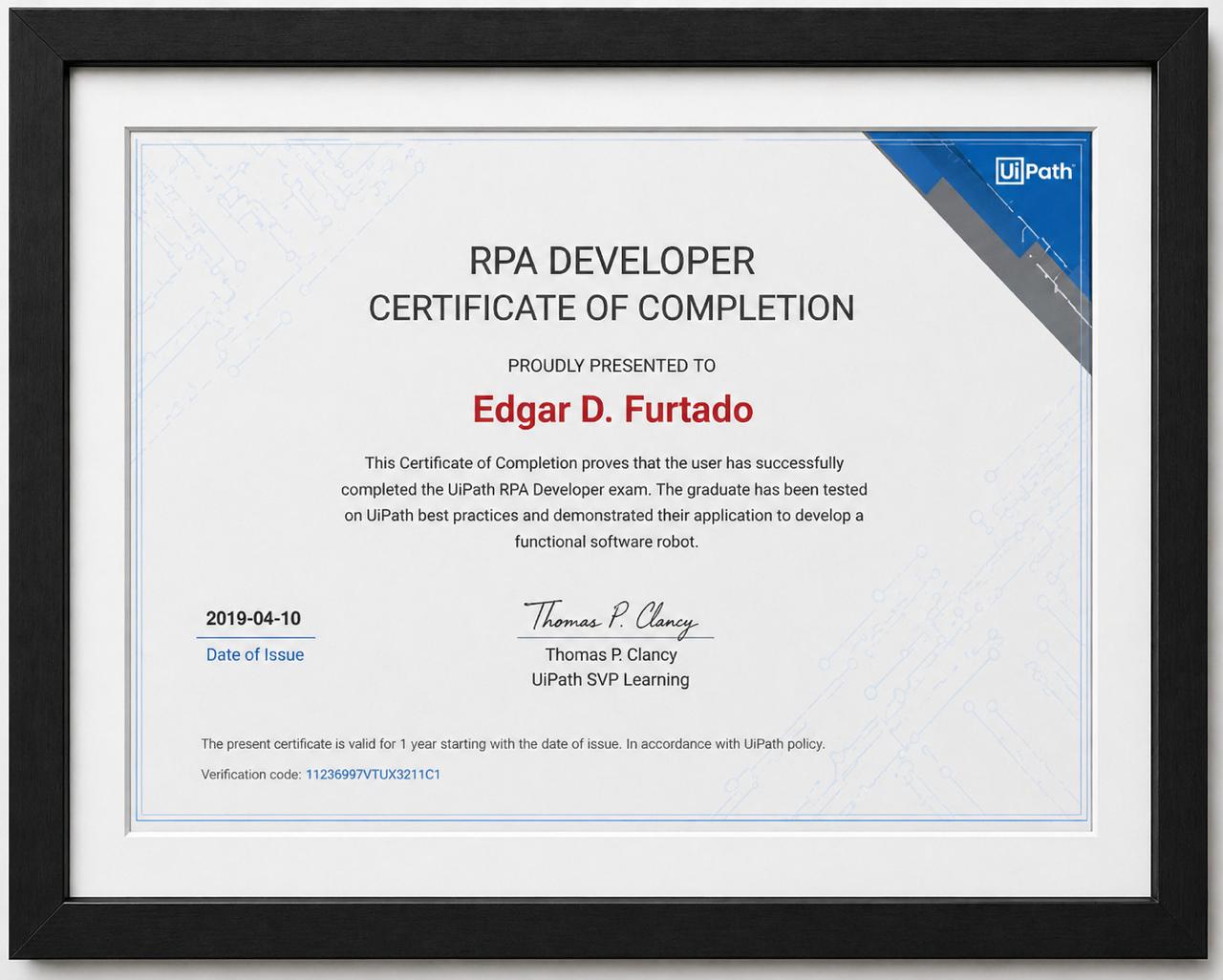
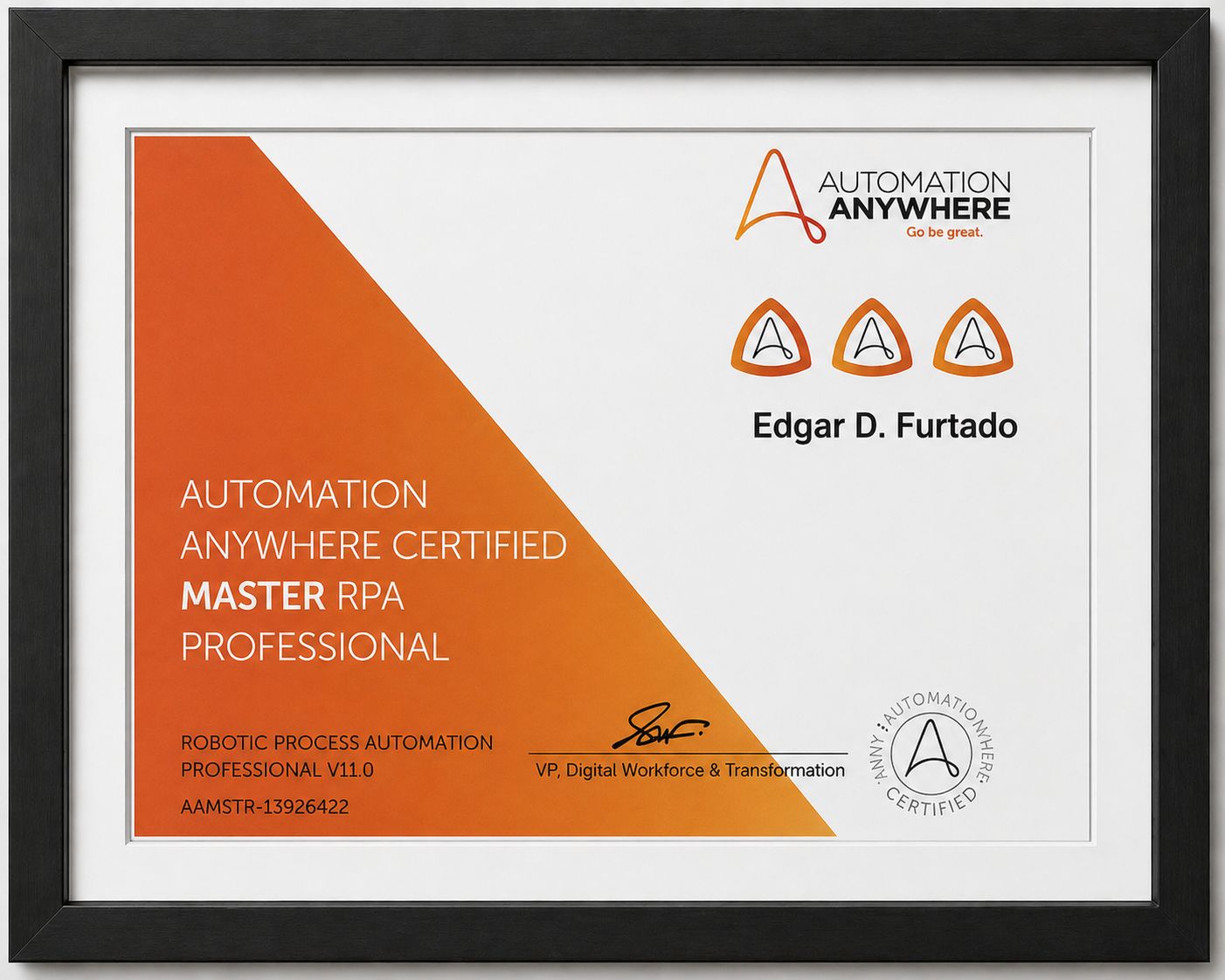
- Certified Innovation Professional engaging with multiple global innovation platforms across Europe, Asia, Latin America, and the Middle East.
- Demonstrated Project Management principles, executing assignments and synthesizing information.
Preview
Edgar De Monte Furtado is a Global Business Innovation practitioner, an Intelligence From Architecture Framework – IFA Framework Practitioner with over two decades of experience supporting businesses and technology groups through services such as Analytical Business Process services, Innovation, Entrepreneurship, Project Management, and Industry 4.0 Data Sciences. He provides Technology as a Service (TAAS) to vertical industries, focusing on scaling innovation, empowering ecosystem development, startup support, and business process creation while providing evaluation-based metrics to solve key customer-centric business problems.
Intelligence From Architecture Framework
IFA Framework Practitioner
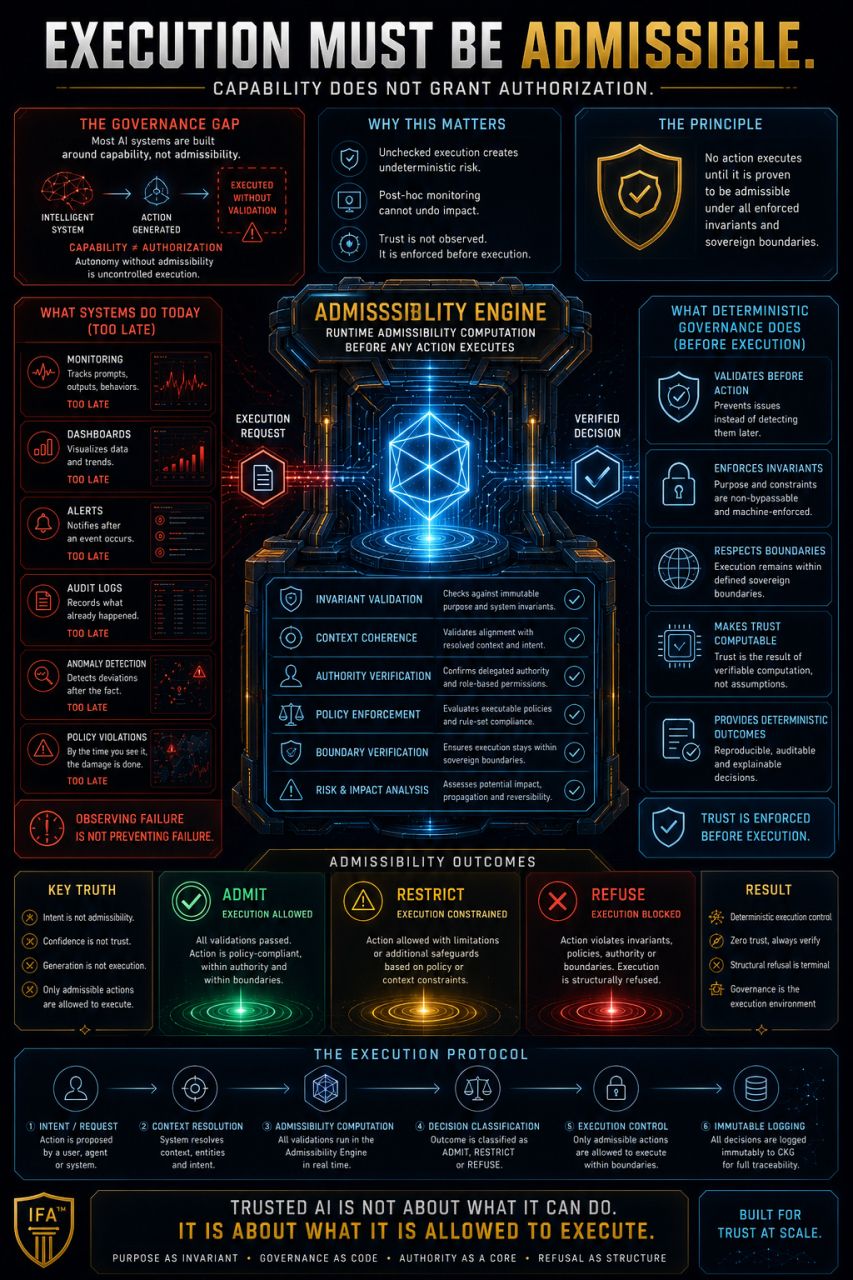
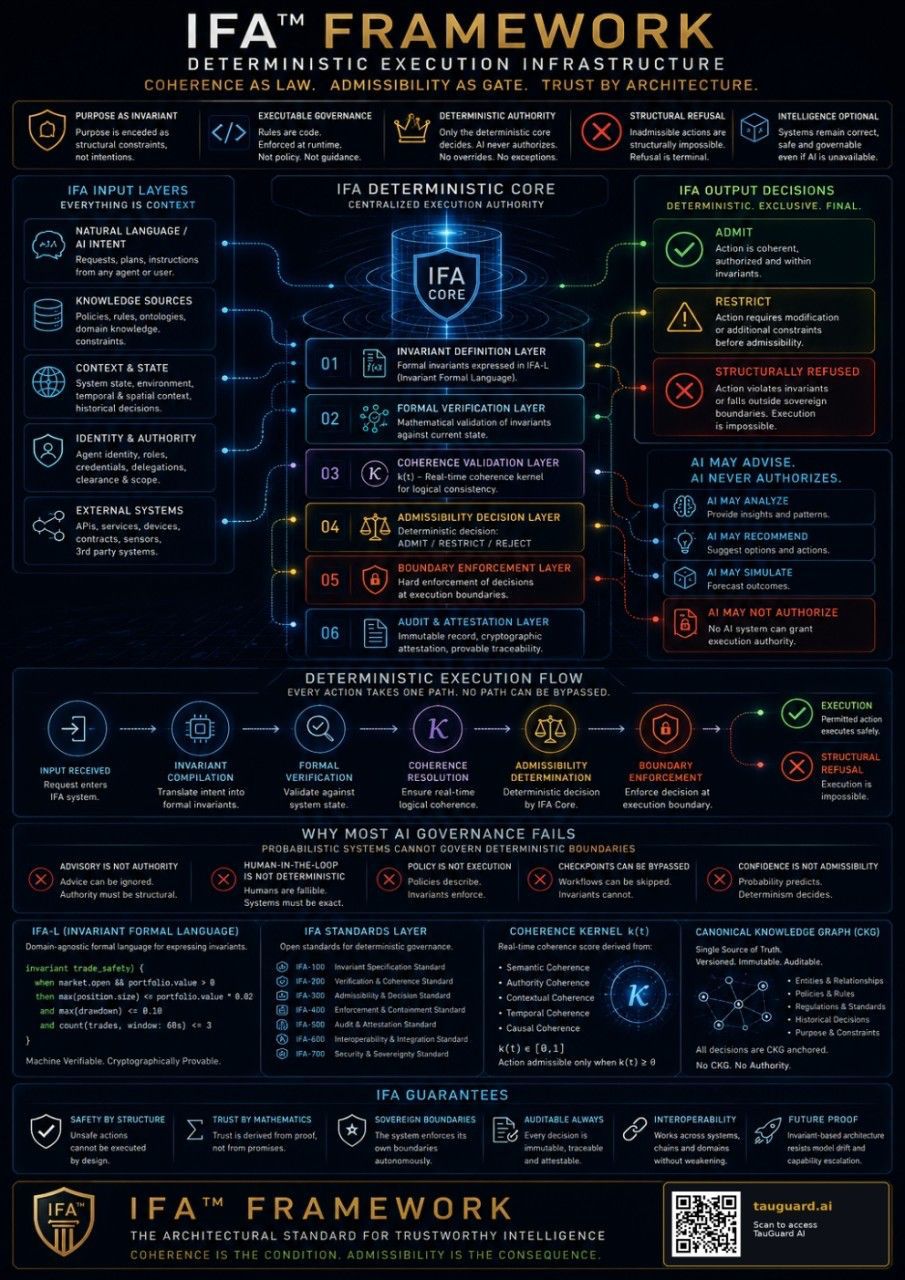
Edgar De Monte Furtado is an authorised practitioner of the Intelligence From Architecture (IFA) Framework — the published architectural standard for deterministic AI governance in high-risk and regulated environments.
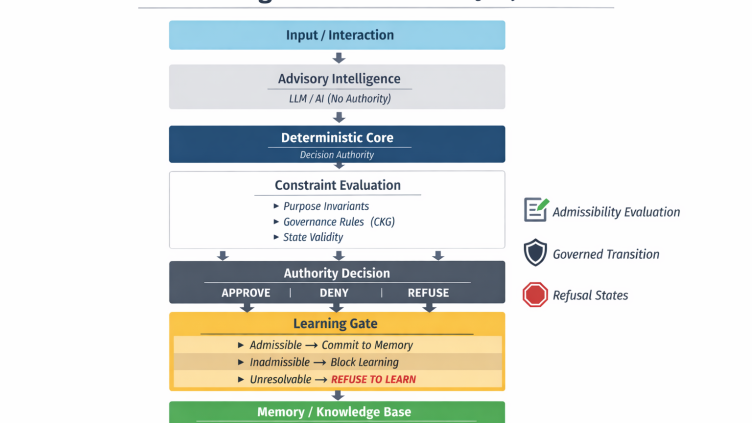
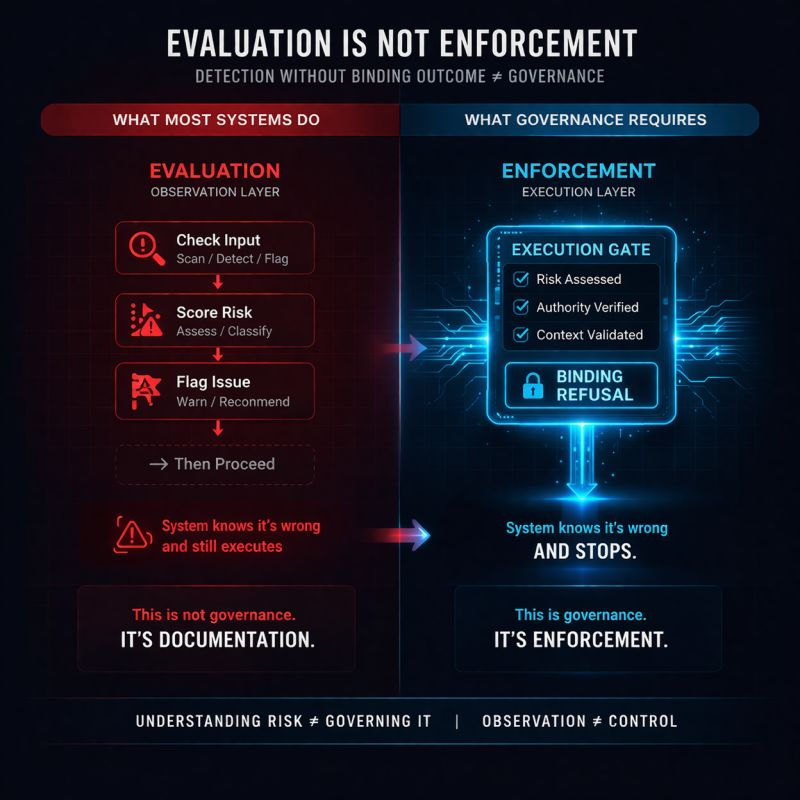
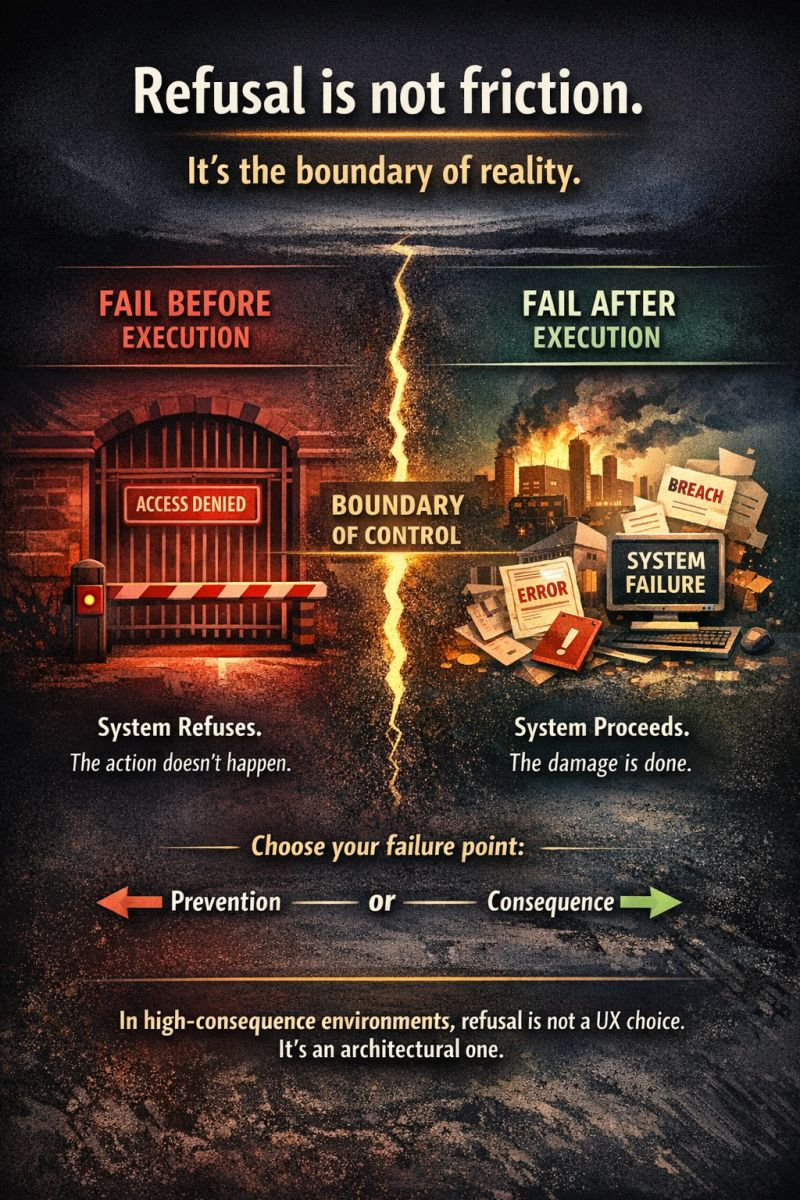
The IFA Framework defines the structural requirements for AI systems whose decisions carry legal, economic, or safety consequences — establishing enforceable invariants, deterministic authority separation, structural refusal, and immutable audit trails by architectural design rather than policy.
IFA Core Specification v1.0 Author: Michal Harcej Published: February 9, 2026 Available: amazon.com/dp/B0GMG6ZRJC License: CC BY 4.0
All AI governance engagements conducted by Edgar De Monte Furtado are structured around the IFA Framework and its reference implementation, TauDIL, developed by TauGuard.
TauGuard Governance Tools
Powering deterministic AI governance for regulated and high-risk environments
Edgar De Monte Furtado deploys TauGuard’s governance infrastructure as the technical foundation of IFA-compliant client engagements. These tools transform governance from policy into architecture — making violation structurally impossible rather than merely prohibited.
TauDIL — Deterministic Intelligence Layer
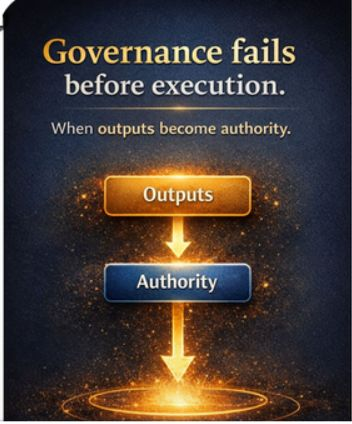
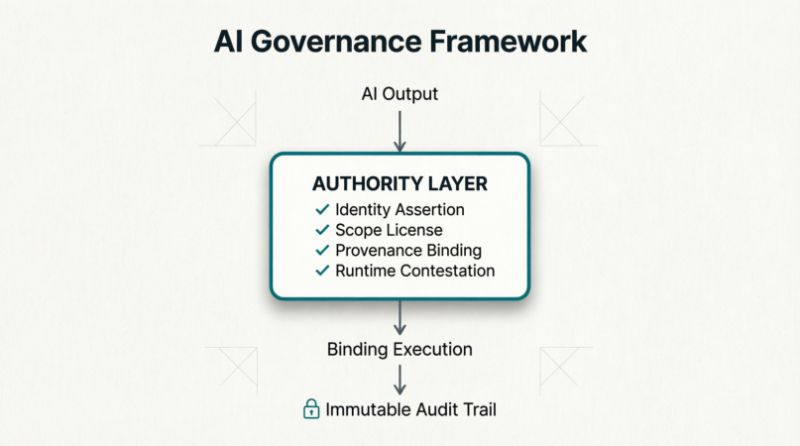
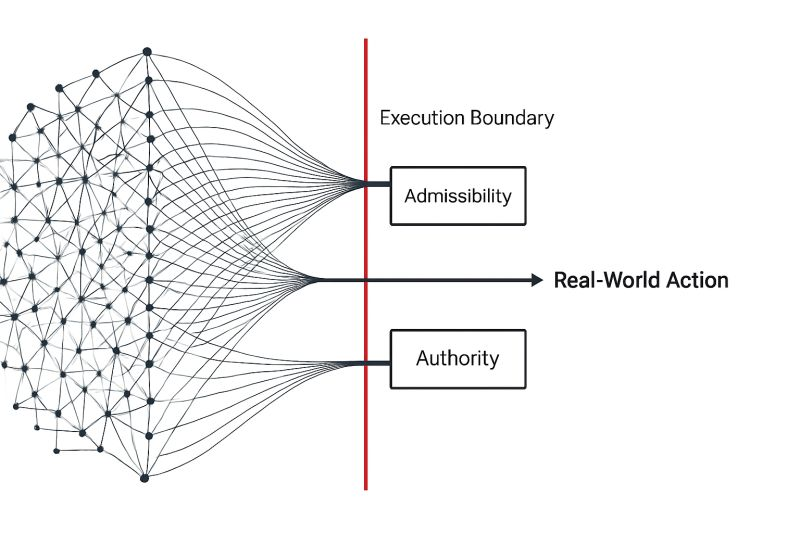
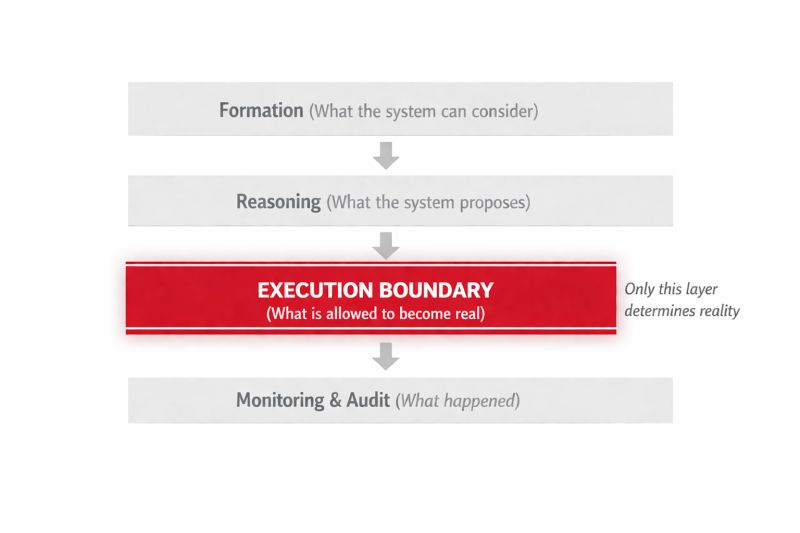
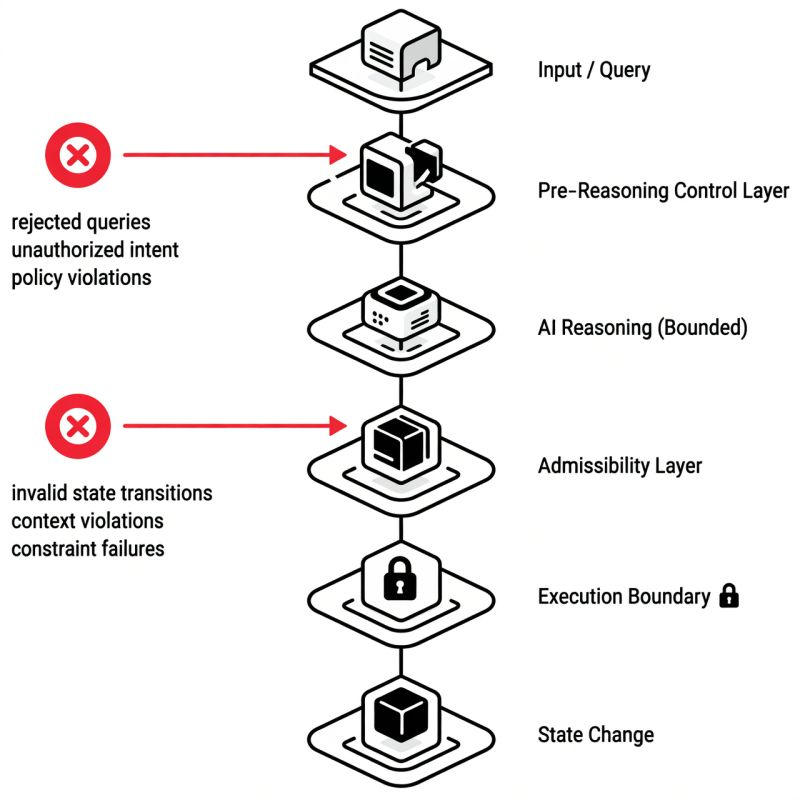
The core governance engine. TauDIL enforces who has authority to act, under which rule, at which version of which knowledge source — before any AI decision reaches execution.
Every decision produces an immutable, hash-chained audit trace referencing the specific rule, authority, and knowledge version that governed it. Not a compliance report. A mathematical proof.
Addresses: EU AI Act Article 12, DORA third-party risk, DoD AI Ethics, human oversight mandates
SYGON — Semantic Intelligence Layer
Real-time semantic coherence scoring and drift detection. SYGON monitors whether AI outputs remain within their authorised semantic boundary — detecting meaning drift before it produces harmful, misleading, or out-of-scope decisions.
Applied to enterprise knowledge bases, SYGON detects when the knowledge an AI acts on has drifted from its authorised meaning — preventing the class of failure where AI is confidently precise about information that is no longer valid.
Applications: compliance monitoring, document governance, CKG integrity, customer service AI
IEL — Invariant Enforcement Layer
Cryptographic governance for autonomous AI execution. IEL connects off-chain AI decision-making to on-chain enforcement — generating mathematical proof that AI actions stayed within authorised invariants before execution occurs.
For organisations deploying AI in autonomous financial, operational, or transactional contexts where human oversight cannot be in the loop for every decision.
Applications: DeFi treasury governance, automated trading, DAO governance, autonomous operations
TauClock / TauTick — Coherence-Driven Execution Engine
Adaptive execution timing based on semantic coherence rather than fixed intervals. Systems wake and act only when coherence conditions warrant it — reducing unnecessary computation, extending battery life in IoT and robotics deployments, and ensuring AI acts only when its model of reality is current.
Applications: robotics, IoT, battery management, autonomous systems, edge AI
IFA Compliance Assessment
Every engagement begins with an IFA Readiness Assessment — evaluating the client’s current AI governance posture against the IFA Core Specification v1.0. The assessment identifies specific gaps across all eleven IFA sections and produces a structured remediation roadmap with TauGuard tool integration recommendations.
Deliverable: IFA Gap Report, remediation roadmap, tool deployment plan
Global Journey
Edgar Furtado’s career reflects a consistent trajectory at the intersection of artificial intelligence, sustainability, and strategic systems thinking. His work spans global business development, innovation ecosystems, and climate-focused transformation, positioning him as a senior advisor capable of translating complex technical concepts into actionable, real-world frameworks.
Strategic Positioning
Edgar operates as a systems integrator, combining advanced analytics, AI-driven methodologies, and sustainability frameworks to guide organizations through large-scale transformation.
His expertise includes:
- ESG-aligned strategy development and execution
- Climate transition planning and decarbonization pathways
- Integration of Industry 4.0 technologies into sustainable systems
- His approach is grounded in measurable outcomes, ensuring that innovation aligns with operational, financial, and policy realities.
Leadership in Sustainability — Climate Innovation
Edgar plays a key role in advancing sustainable transformation across industries by designing and implementing end-to-end climate strategies.
Sustainable Transformation
- Net Zero and decarbonization strategy design (Scope 1, 2, and 3)
- Climate scenario analysis and transition risk assessment
- Life Cycle Assessment (LCA) frameworks for environmental impact evaluation
- Carbon management, sequestration planning, and residual emissions strategy
- Alignment with global frameworks such as SBTi, IPCC, and UNFCCC
Integrating governance, risk management, performance metrics ensuring climate metrics remain credible, scalable and globally aligned
AI-Driven Infrastructure — Systems Innovation
Edgar leads the application of AI in building sustainable and resilient infrastructure systems.
Key areas include:
- AI-enabled infrastructure optimization and resource monitoring
- Data-driven systems for real-time climate risk mitigation
- Energy-efficient transformation models and carbon-shift technologies
- Integration of IoT, smart systems, and predictive analytics
Bridging gap between emerging technologies and practical implementation, ensuring solutions remain technically feasible and economically viable.
Global Innovation — Capacity Building
Edgar’s career is defined by his role as a global connector and capacity builder across industries and regions.
Capacity Building Ecosystem:
- Startup ecosystems, mentoring founders and scaling innovation initiatives
- Workforce development through collaboration with universities, career centers, and industry leaders
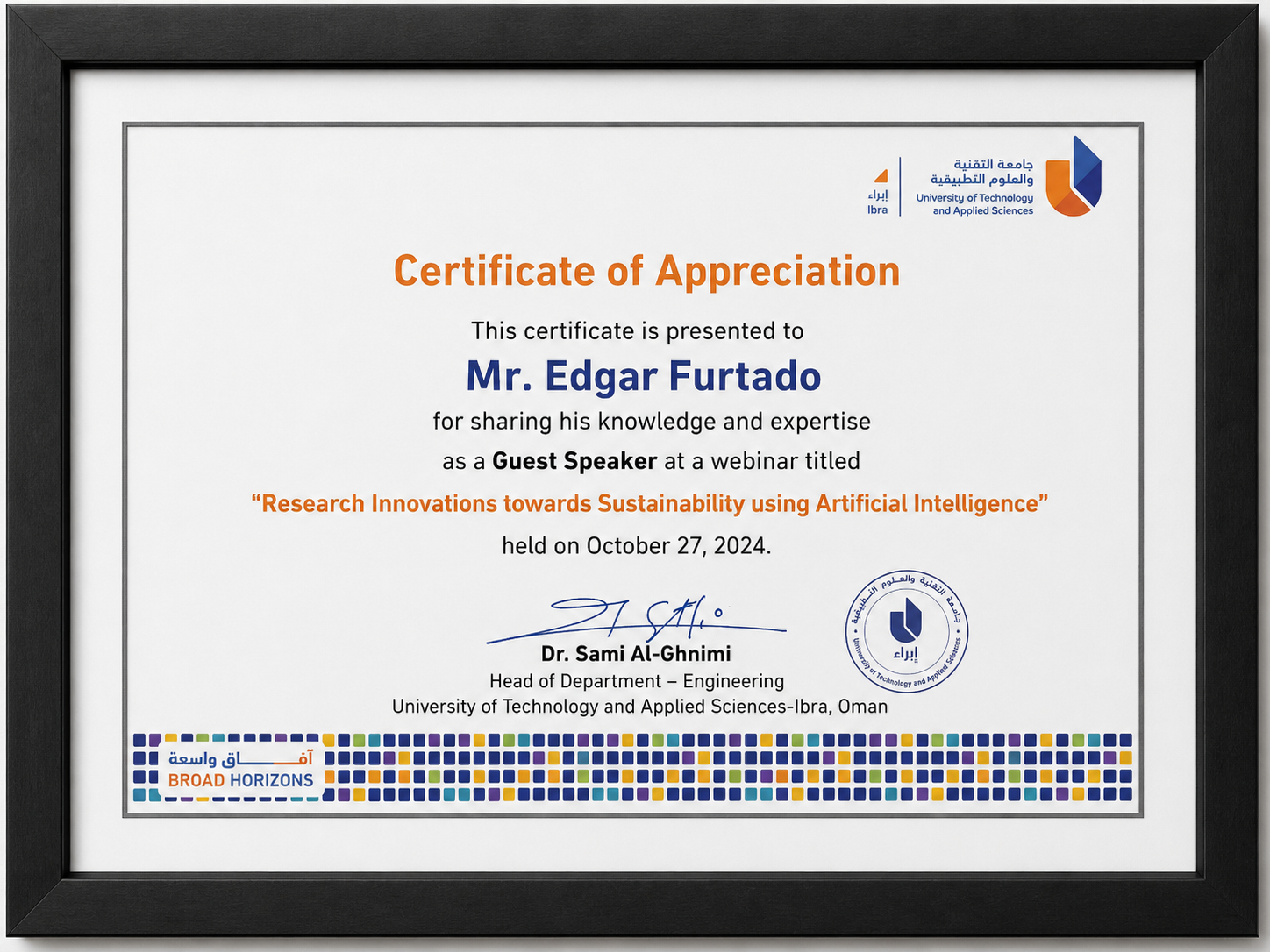
- International innovation platforms across Europe, Asia, Latin America, and the Middle East
- Cross-sector partnerships aligning talent, technology, and market needs
Ecosystem emphasizes inclusiveness, collaboration and creation of shared innovation ecosystems.
Operational — Business Leadership
With a strong foundation in operations and business development, Edgar has led and supported complex initiatives across multiple industries, including:
- Life Sciences
- Financial Services
- Information Technology
- Artificial Intelligence
- Sustainability and Climate Innovation
Operational Environments:
- Managing global projects and multi-stakeholder environments
- Building long-term client and partner relationships
- Designing data-driven business processes and reporting systems
- Leading change management and organizational transformation
Climate Strategy — Analytical Expertise
Edgar applies structured analytical methodologies to evaluate and design climate strategies at scale.
Climate Pathways:
- Climate pathway design and sectoral transition modeling
- Emissions forecasting and decarbonization roadmaps
- Integrated assessment models and socio-economic frameworks
- Carbon pricing, taxation, and regulatory strategy
- Identification and mitigation of greenwashing risks
He develops scenarios that are plausible, distinctive, consistent, relevant, and strategically challenging, enabling leadership teams to navigate uncertainty with clarity.
Industry Strategies
AI-driven innovation leader with 25+ years of experience advancing sustainable ecosystems, circular economy initiatives, and agentic AI solutions.
Expertise includes guiding startups, executing ESG-aligned strategies, and applying OpenAI and Industry 4.0 technologies to deliver measurable, high-impact results.
Proven track record in transforming climate, biodiversity, and digital equity initiatives through intelligent collaboration and metrics-driven execution.
Industry Tools:
- Agentic AI
- OpenAI Tools
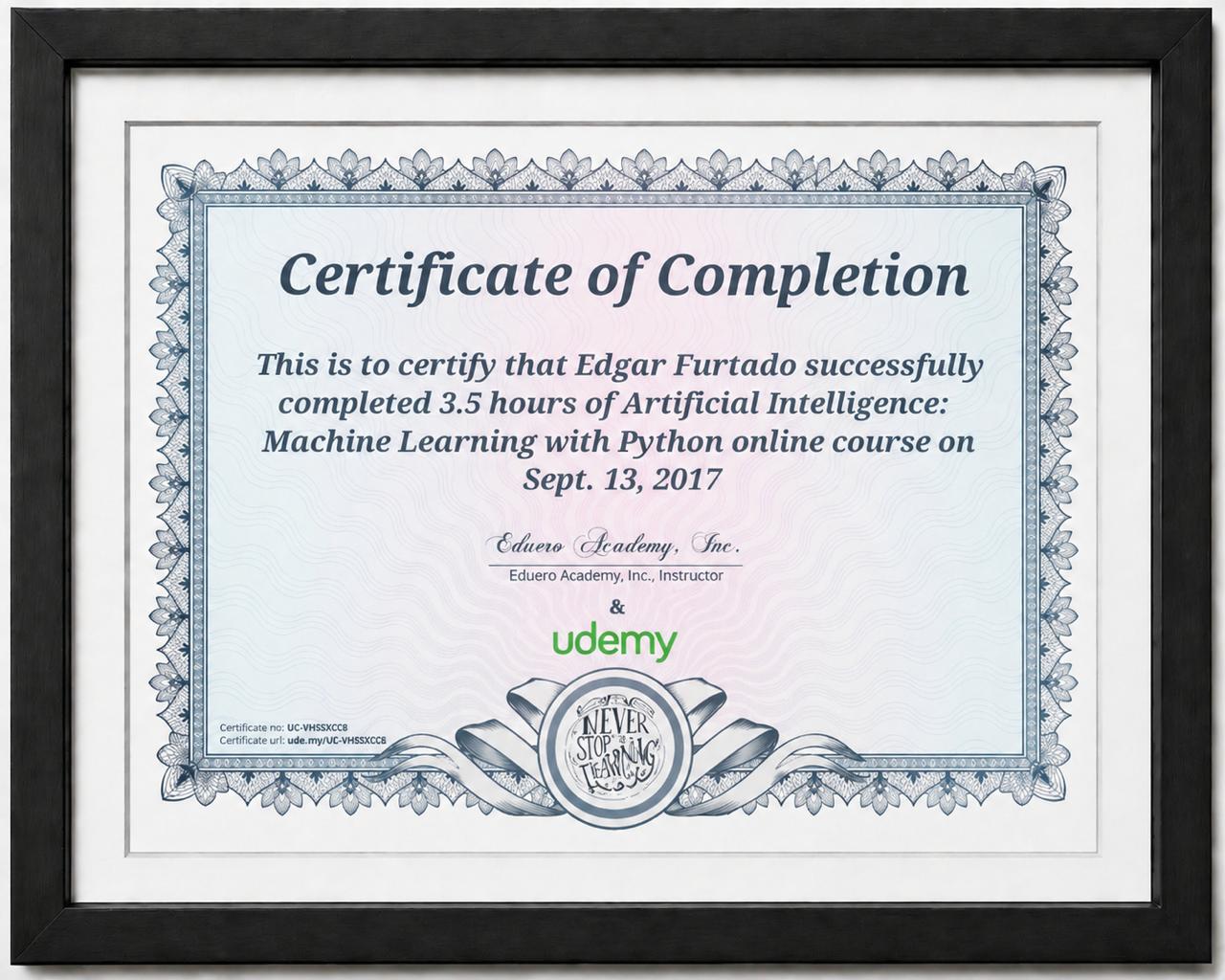
- Machine Learning
- Neural Networks
- Cloud Platforms
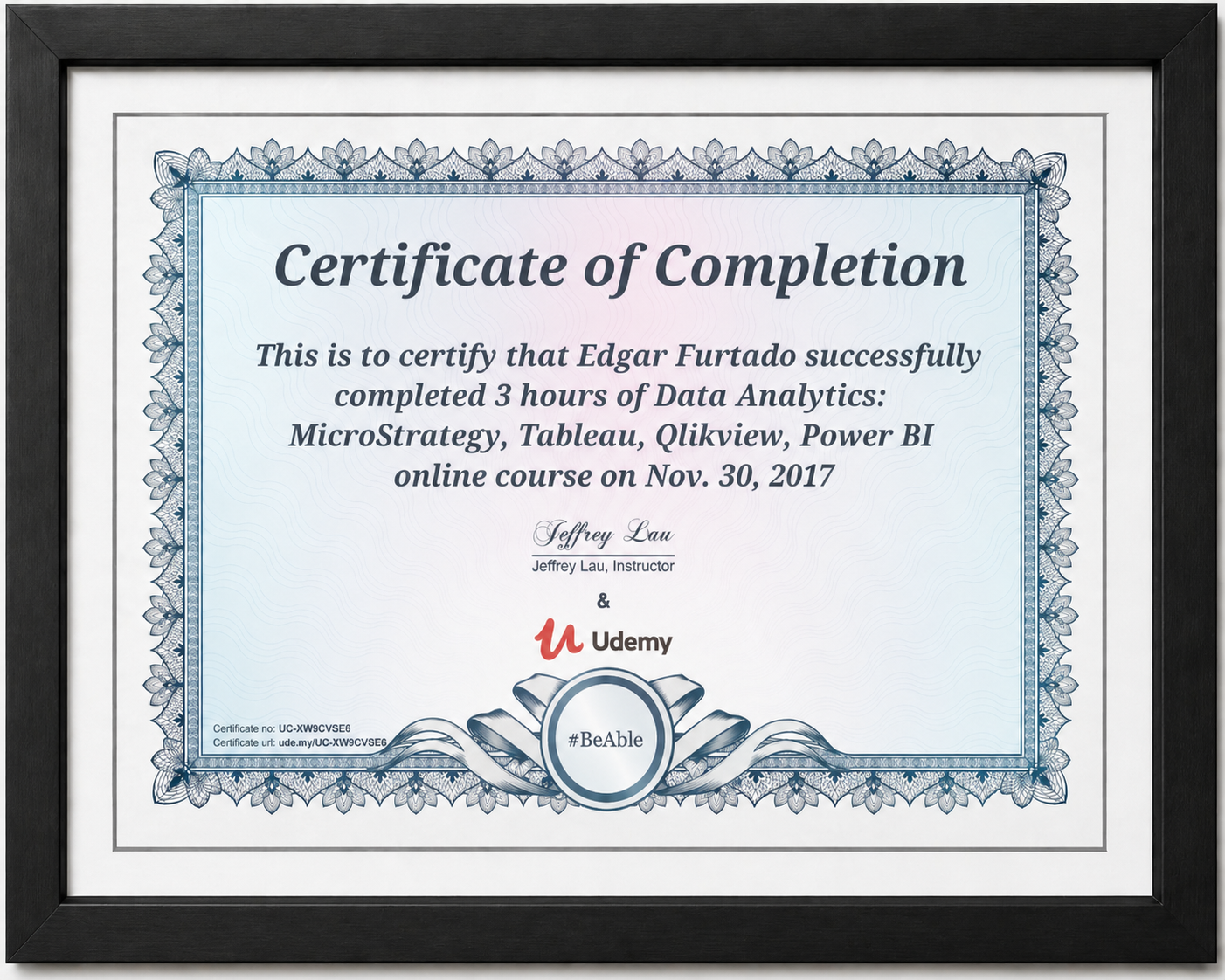
- Big Data Analytics
- Circular Economy
- ESG Strategy
- IoT – Smart Grids
- Industry 4.0
- Startup Mentorship
- AI-Powered Campaigns
- Sustainability Innovation
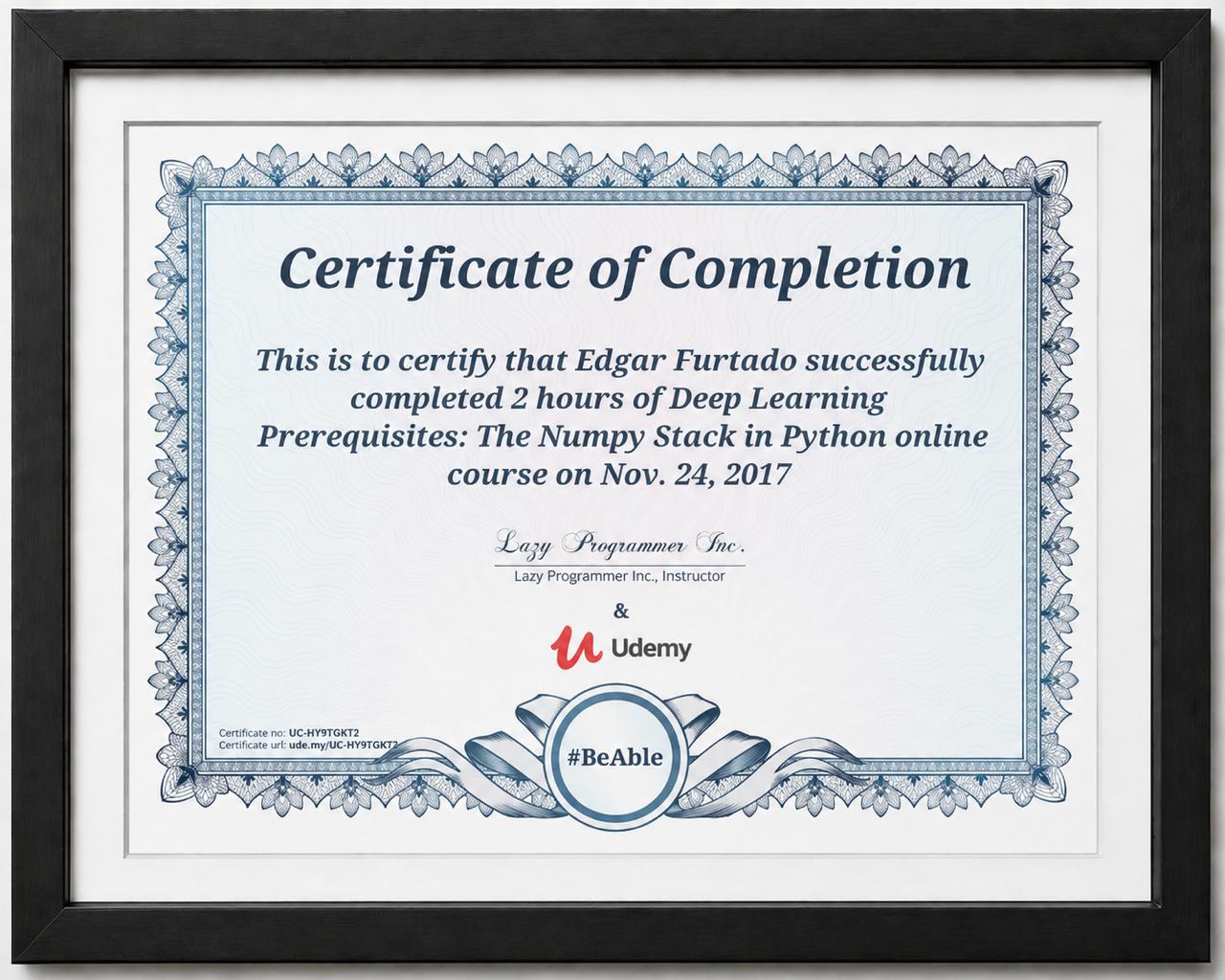
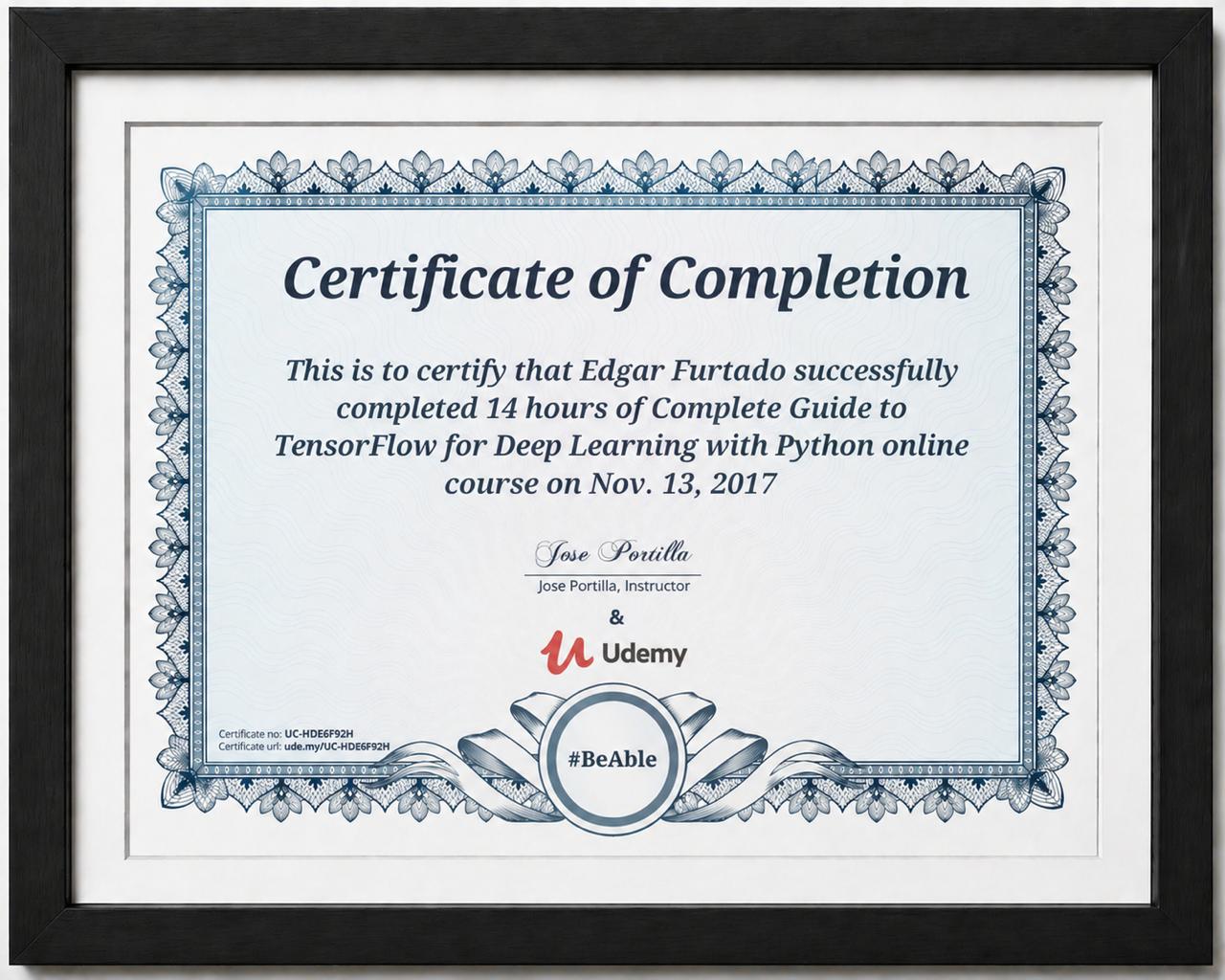
- Python – TensorFlow
Business — Leadership Expertise:
- Innovation Vision — Business Validation
- Lean Methodologies
- Data Analysis — Model Building
- Organization — Change Management
- Coaching — Leadership
- Business Development
- Continuous Process Improvement
Strategic Capabilities:
- Relationships with business community – ensure execution of objectives
- Lead service levels and business processes
- Manage client expectations, relationships, and satisfaction levels
- Team alignment. Achieve objectives
- Consistent and accurate reporting and solution methodologies
- Sourcing strategies aligned with client goals and policies
- Global operational consultancy strategies
Key AI — Data Science Algorithms:
1. Regression Algorithms
- Ordinary Least Squares Regression (OLSR)
- Linear Regression
- Logistic Regression
- Stepwise Regression
- Multivariate Adaptive Regression Splines (MARS)
- Locally Estimated Scatterplot Smoothing (LOESS)
2. Instance-Based Algorithms
- k-Nearest Neighbour (kNN)
- Learning Vector Quantization (LVQ)
- Self-Organizing Map (SOM)
- Locally Weighted Learning (LWL)
3. Regularization Algorithms
- Ridge Regression
- LASSO
- Elastic Net
- Least-Angle Regression (LARS)
4. Decision Tree Algorithms
- Classification and Regression Tree (CART)
- Iterative Dichotomiser 3 (ID3)
- C4.5 and C5.0
- Chi-squared Automatic Interaction Detection (CHAID)
- Decision Stump
- M5
- Conditional Decision Trees
5. Bayesian Algorithms
- Naive Bayes
- Gaussian Naive Bayes
- Multinomial Naive Bayes
- Averaged One-Dependence Estimators (AODE)
- Bayesian Belief Networks (BBN)
- Bayesian Networks (BN)
6. Clustering Algorithms
- k-Means
- k-Medians
- Expectation Maximization (EM)
- Hierarchical Clustering
7. Association Rule Learning
- Apriori Algorithm
- Eclat Algorithm
8. Artificial Neural Networks
- Perceptron
- Backpropagation
- Hopfield Network
- Radial Basis Function Network (RBFN)
9. Deep Learning Algorithms
- Deep Boltzmann Machines (DBM)
- Deep Belief Networks (DBN)
- Convolutional Neural Networks (CNN)
- Stacked Auto-Encoders
10. Dimensionality Reduction
- Principal Component Analysis (PCA)
- Principal Component Regression (PCR)
- Partial Least Squares Regression (PLSR)
- Sammon Mapping
- Multidimensional Scaling (MDS)
- Projection Pursuit
- Linear Discriminant Analysis (LDA)
- Mixture Discriminant Analysis (MDA)
- Quadratic Discriminant Analysis (QDA)
- Flexible Discriminant Analysis (FDA)
11. Ensemble Algorithms
- Boosting
- Bagging
- AdaBoost
- Stacked Generalization
- Gradient Boosting Machines (GBM)
- Gradient Boosted Regression Trees (GBRT)
- Random Forest
12. Other Algorithms — Fields
- Computational Intelligence (Evolutionary Algorithms)
- Computer Vision (CV)
- Natural Language Processing (NLP)
- Recommender Systems
- Reinforcement Learning
- Graphical Models
Milestones
- Experience: Adapted to a rapidly changing workforce and business priorities over two decades.
- Recognition: Honored with Global Distinguished Innovators Award – Global Innovation Institute.
- Global Focus: Engaged with major United Nations Environment Development centers, contributing strategies towards the United Nations Framework Convention on Climate Change (UNFCCC), European Climate Framework Initiatives, and Global Sustainable Development movement.
- Future Vision: Driving innovation, empowering communities, foster sustainability and unlock Ai Governance implementation across industries.
Recognition
Edgar D. Furtado
 Edgar D. Furtado works within an intellectual range of systems thinking, and future-oriented ambition across climate governance, artificial intelligence, space infrastructure, and sustainable finance, Edgar consistently explored how emerging technologies can be aligned with long-term planetary and social outcomes.
A defining theme was the intersection of AI and sustainability. Edgar examined how AI can optimise energy use in terrestrial and orbital data centres, advance portfolio decarbonisation beyond compliance reporting, and support evolutionary platforms for healthcare and drug discovery. These ideas reflected a focus on moving from theory to implementation, turning complex systems into practical, investable strategies.
In parallel, Edgar contributed to global climate governance thinking, including critiques of Conference of the Parties (COP) processes and the design of new institutional frameworks such as the Global Council on Climate and Nature, emphasising accountability, science alignment, and coordinated action guided by pragmatism, ethics and long-term impact.


Philosophy
- Innovation is a calling that is about daring to imagine what is possible, challenging the status quo, and creating solutions that uplift communities and bridge divides.
- Key insight into front-line global strategy is inclusiveness and equal partnership towards sustainable innovation growth.
- Belief about creating inclusive spaces with shared language and collaboration through innovative metric-driven practices.
- Commitment to driving innovation that empowers communities, fosters sustainability, and unlocks new possibilities for the future.
Trending Differentiator
- Unique Differentiators: Strategic connector and capacity builder, aligning people, ideas, and execution. Entrepreneurial spirit operating with a hands-on, visual approach, translating business insight into full life-cycle analysis. A data scientist who builds structured roadmaps to solve complex strategic problems – MECE principled (Mutually Exclusive, Collectively Exhaustive)
Commitment: Actively engaged in global climate agenda, strong position on sustainable development, collaborating with leading United Nations Environment and Development centers.
Algorithms (Detailing Data Scientist role): Expertise spans key algorithmic categories, including Regression, Instance-based methods, Regularization, Decision Trees, Bayesian methods, Clustering, Association Rule Learning, Artificial Neural Networks, Deep Learning, Dimensionality Reduction, Ensemble methods, and advanced domains such as Computational Intelligence, Computer Vision, and Natural Language Processing.
Testimonials
Together, we collaborated effectively to meet corporate leadership deadlines, demonstrating strong teamwork and dedication.
Information
- Full Name: Edgar De Monte Furtado
- Location: Boston Massachusetts, USA
- Profession: Global AI governance leader
- AI governance frameworks, enterprise AI strategy, and sustainability-driven innovation
Languages
- English
- Portuguese
- Spanish
Education
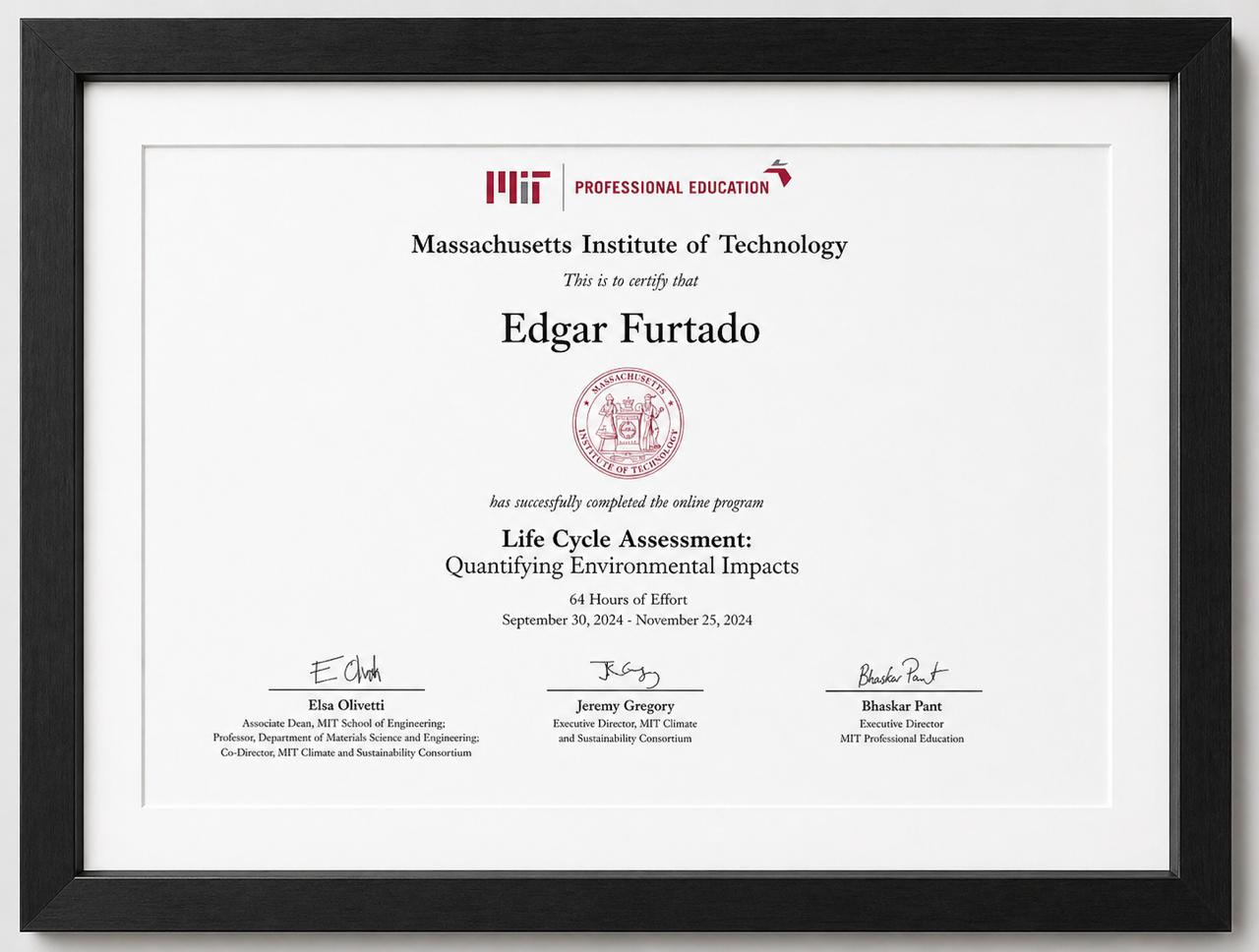
- Massachusetts Institute of Technology (MIT) — Life Cycle Assessment (2024)
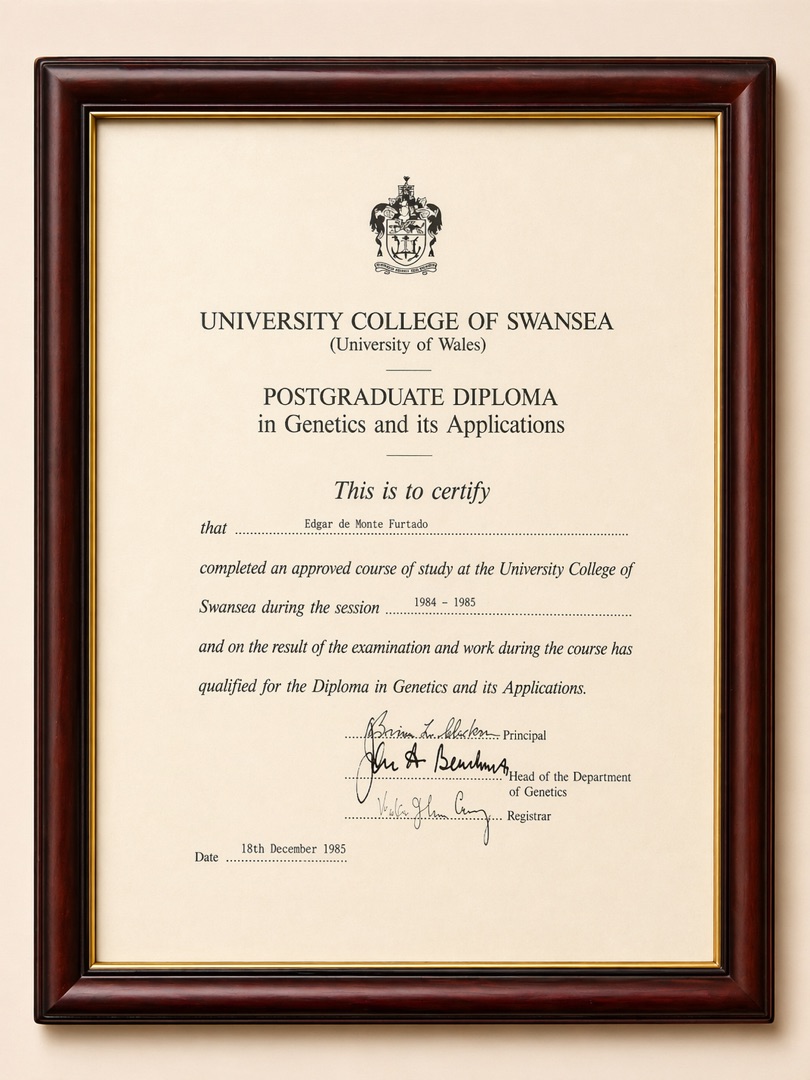
- Swansea University (University of Wales) - Post Graduate Diploma - Genetics and Evolutionary Biology
- GInI — Certified Innovation Professional
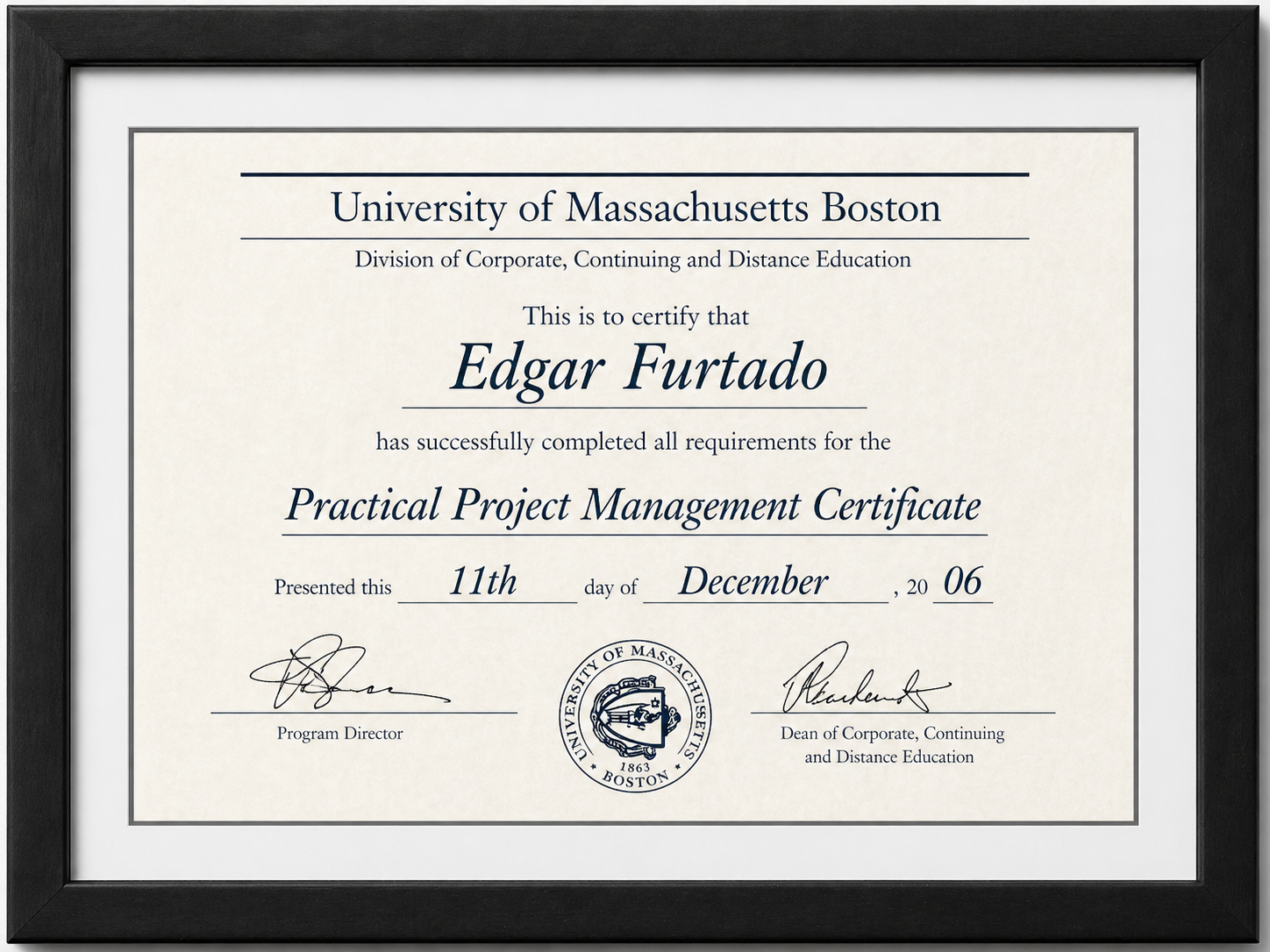
- University of Massachusetts Boston — Project Management
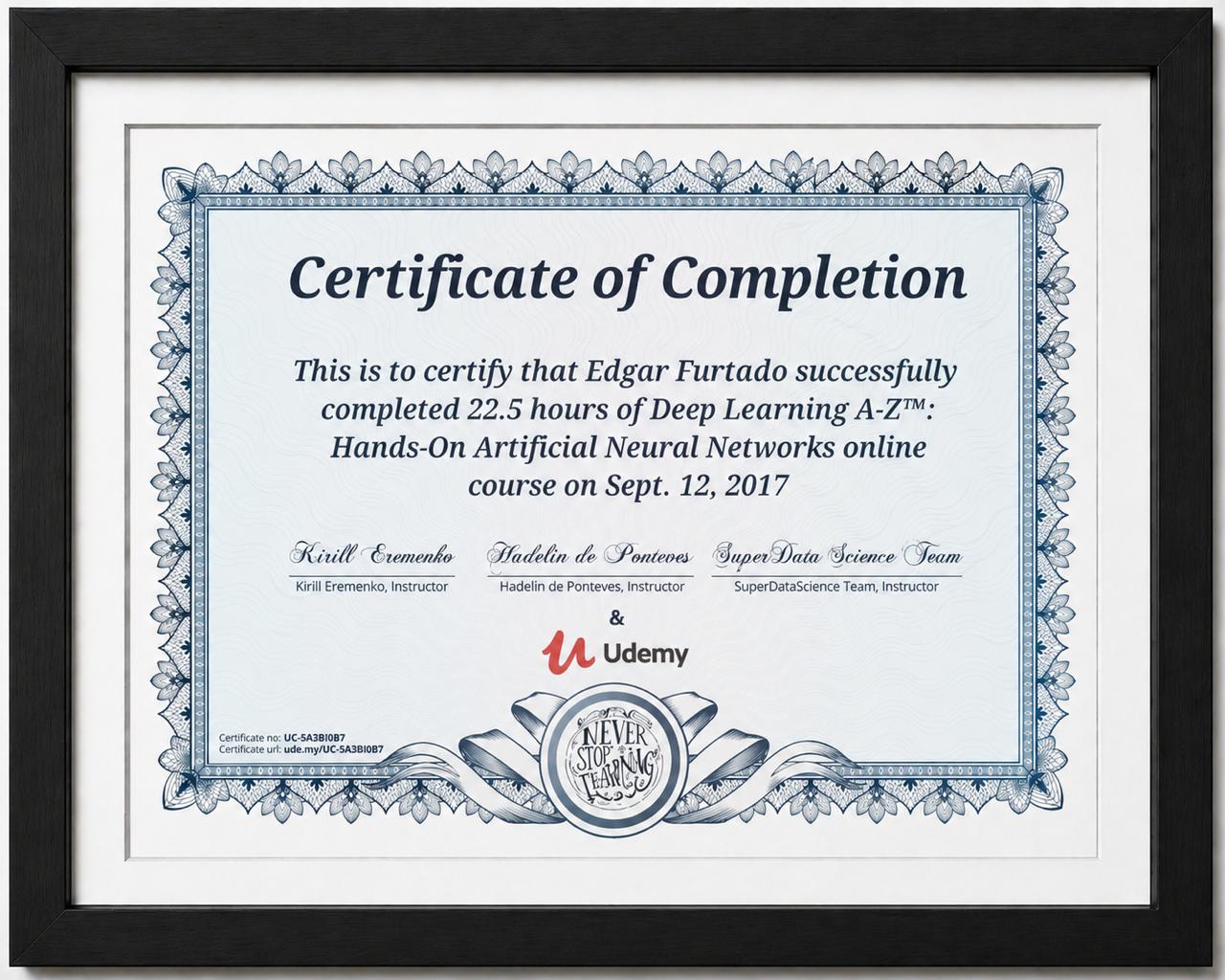
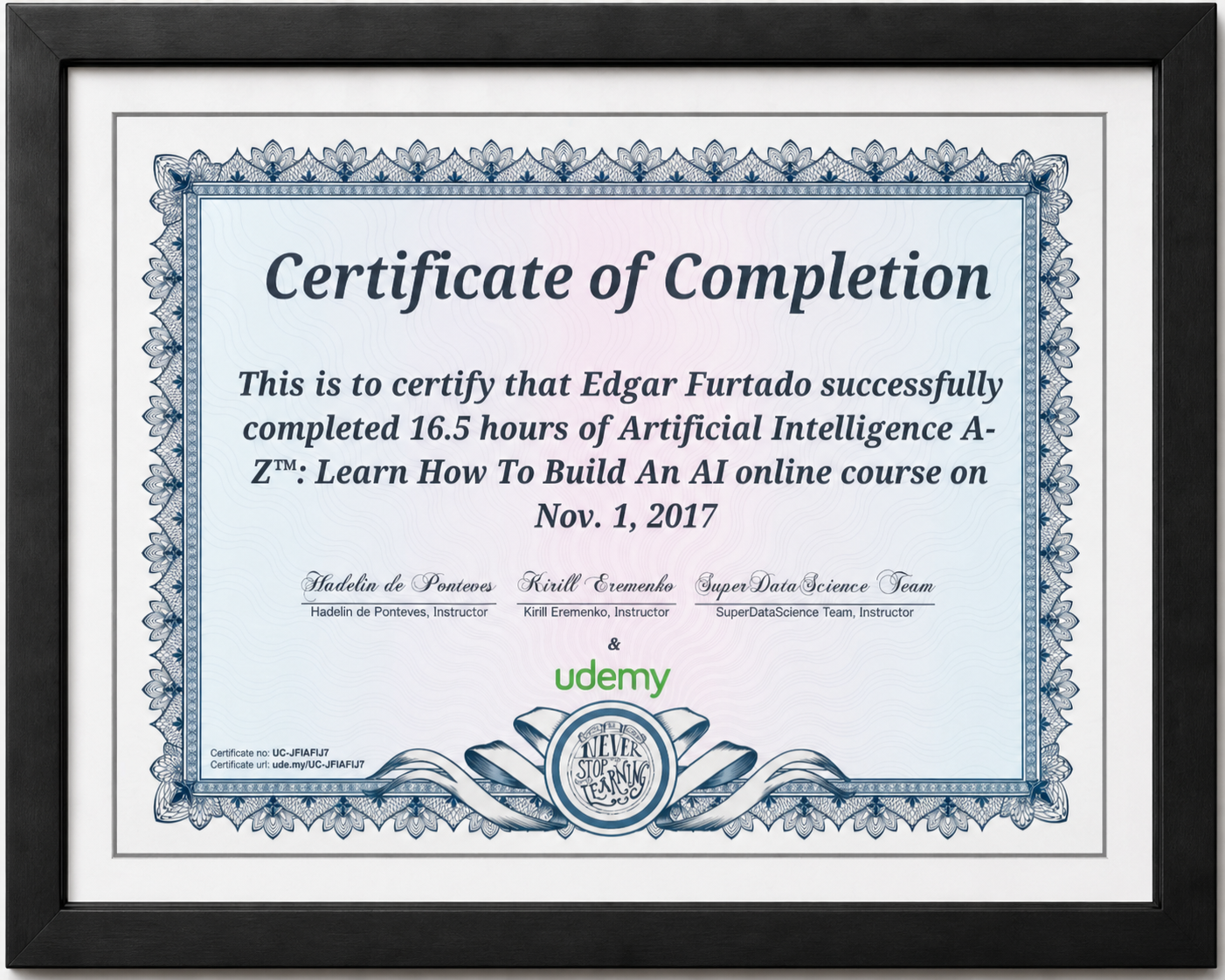
- Data Science Dream Jobs — Data Science
- Bachelor of Science - Plant Botany Mumbai University
Skills & Expertise
- AI Governance Frameworks
- AI Risk & - Compliance
- Enterprise AI Architecture
- Sustainability - ESG Integration
- Innovation Strategy
- Data - AI Value Chain Design
- Responsible AI (Fairness, Explainability, Safety)
Professional Timeline
- 2026–Present — AI Governance Lead
- 2021–2026 — AI Business Architect
- 2020–2026 — Strategic Enterprise AI
- 2022–2026 — Innovation Consultant (GInI et al)
- 2017–2024 — Entrepreneur (Nevon Solutions)
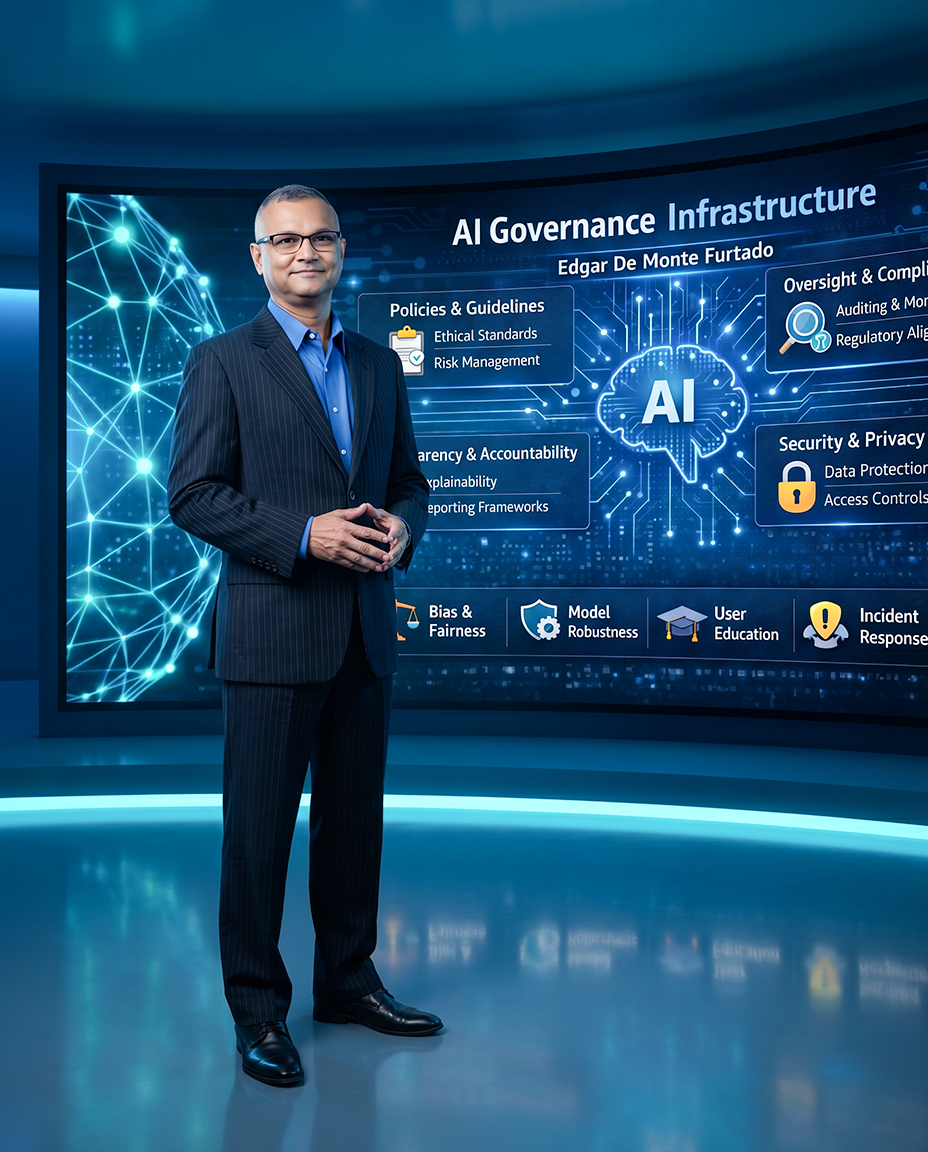
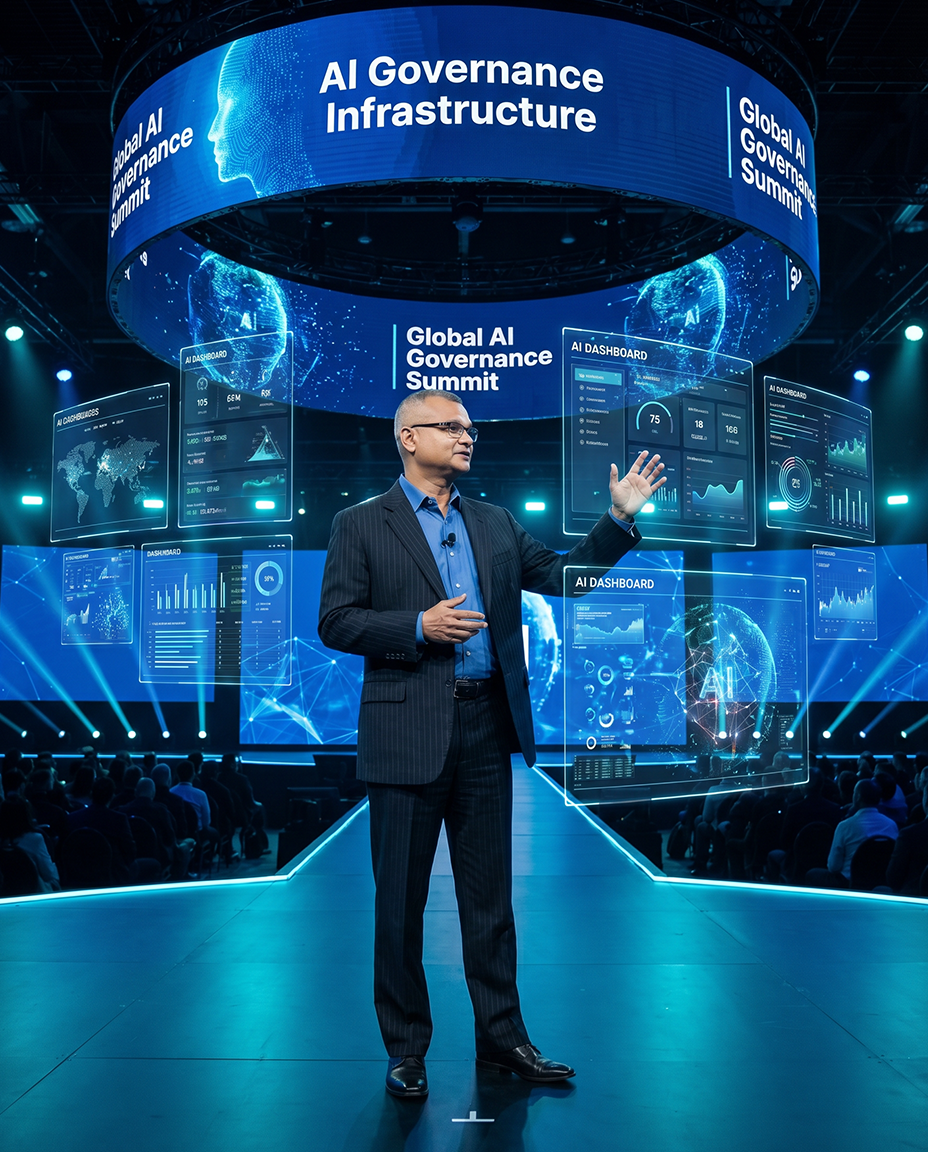
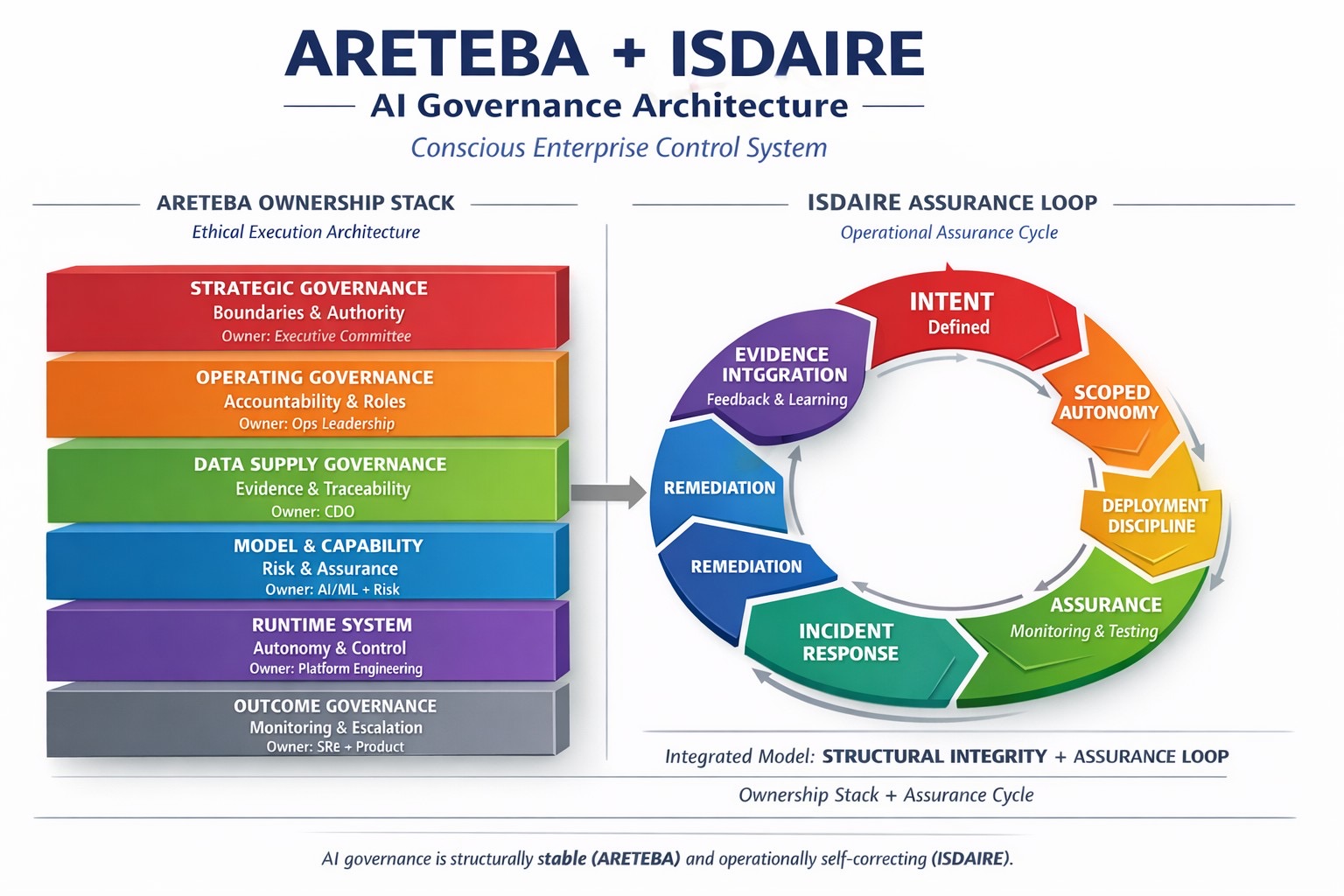
AI Governance
AI Governance and Orbital Compute Architecture
Designing Accountable Intelligence and Infrastructure at Scale
AI systems are evolving beyond software.
They now operate as infrastructure.
This shift requires a new standard:
Every intelligent system must be structured, accountable, and engineered for real-world impact from the moment it is designed.
This is where two disciplines converge:
- AI governance
- Orbital compute architecture
Together, they define how intelligent systems operate responsibly across Earth and space.
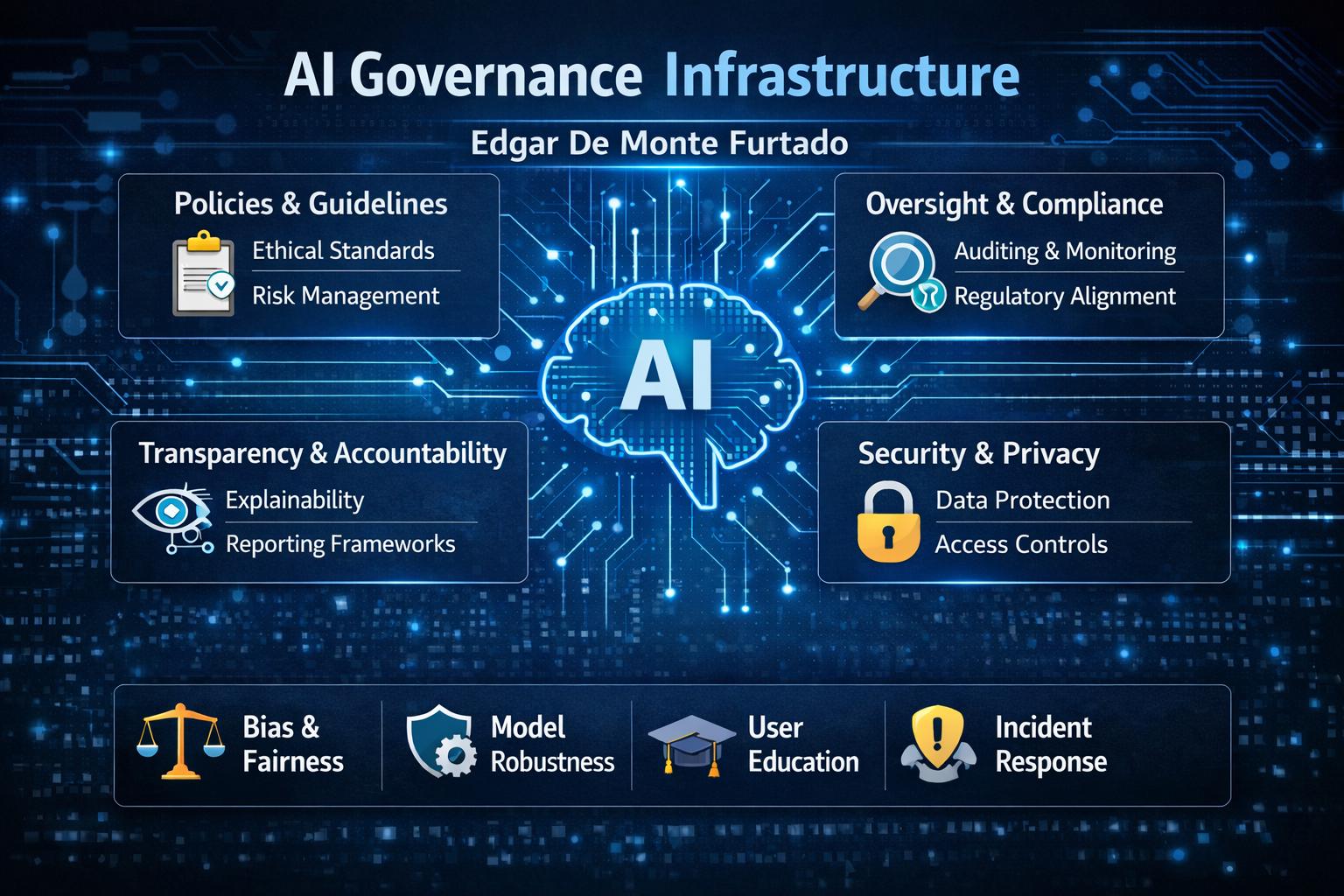
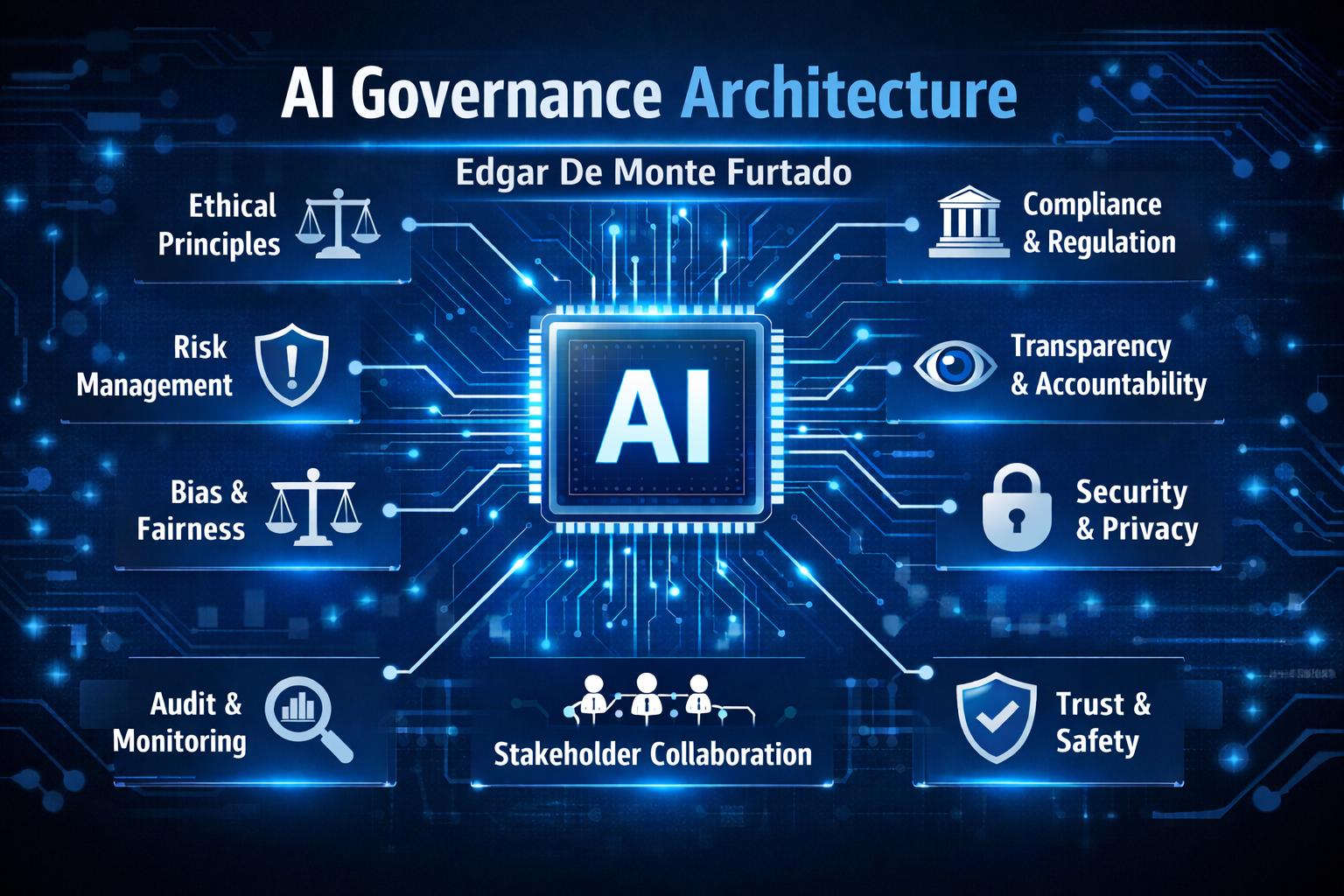
AI Governance, Explained Simply
AI governance establishes a clear and operational standard:
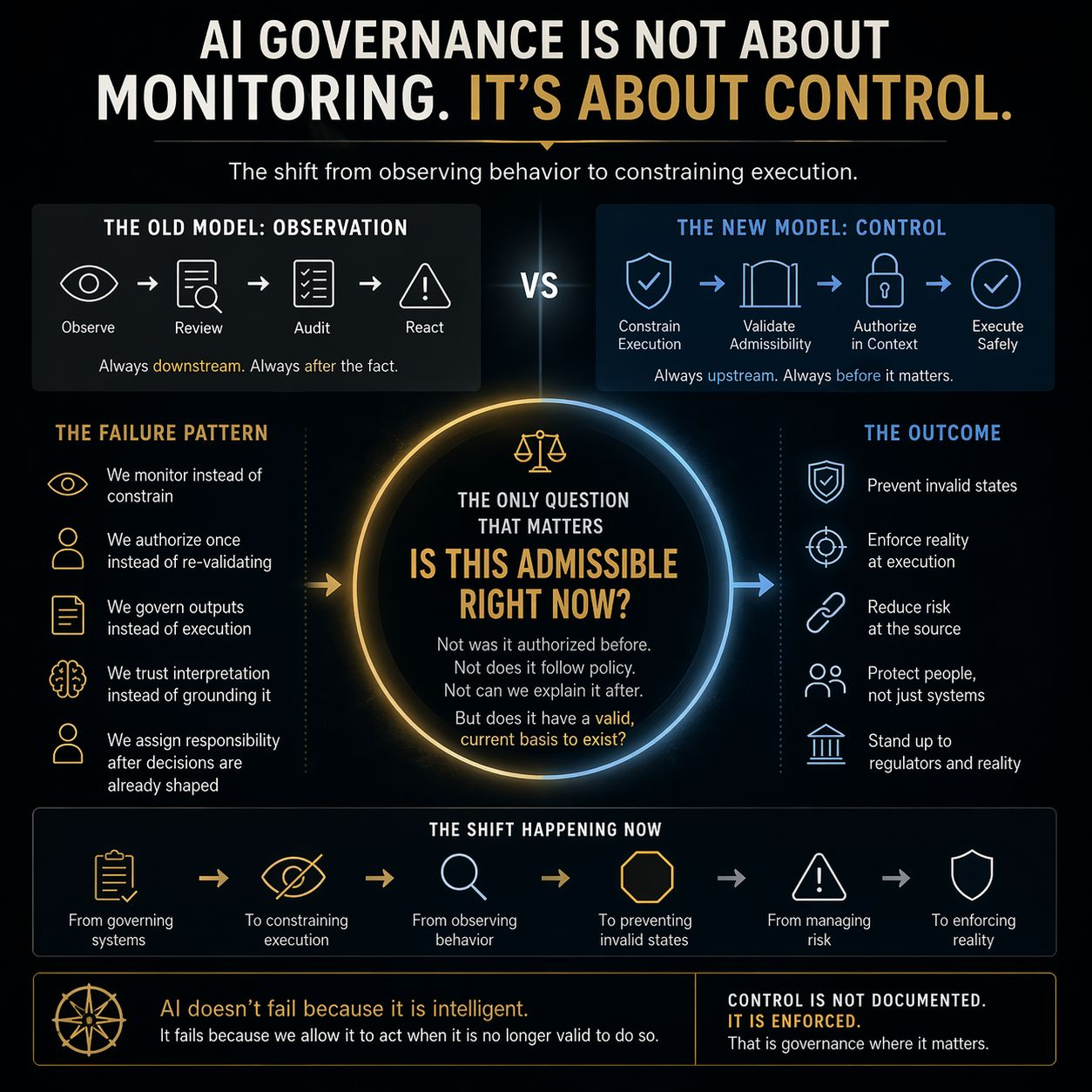
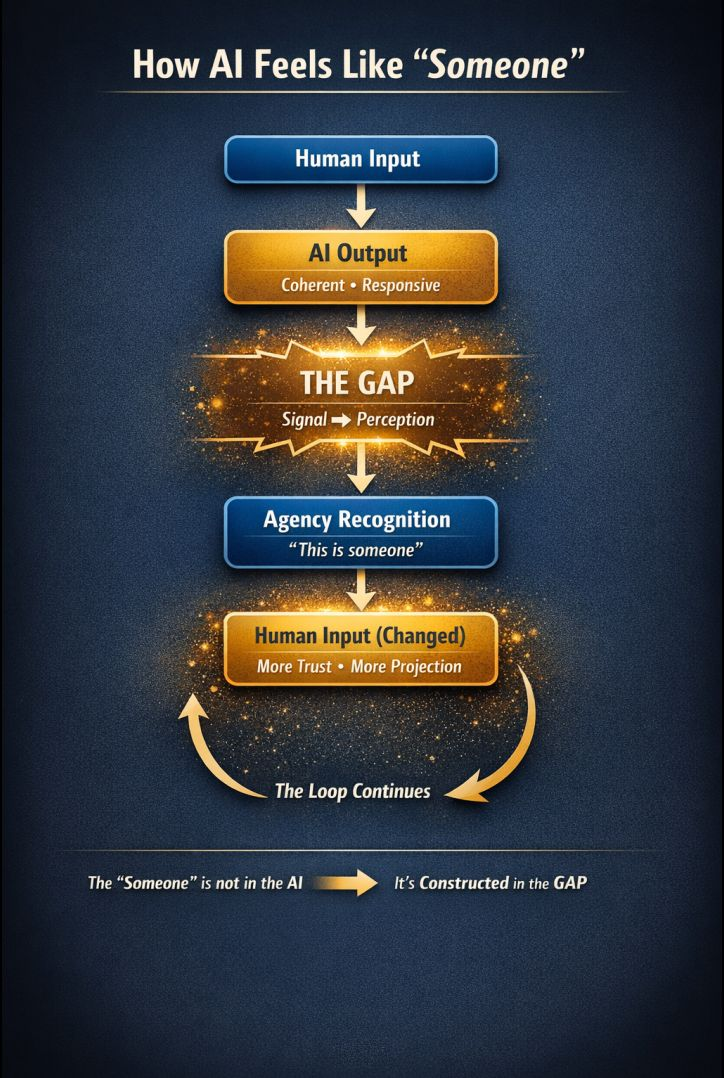
Every AI-driven decision is provable, defensible, and attributable before it creates impact.
This transforms AI into a system where:
- Authority is visible
- Decisions are structured
- Accountability is embedded
When governance is designed correctly, organizations operate with clarity and confidence under any level of scrutiny.
The Foundation of Governed Systems
A governed AI system answers four critical questions:
- Who decided to use AI
- Who approved its purpose and limits
- Who holds authority to intervene
- What evidence confirms these decisions
These elements create a framework where decision-making is structured and traceable.
From Principles to Infrastructure
Organizations align around values such as:
- Fairness
- Transparency
- Accountability
- Human oversight
Governance transforms these into operational systems by defining:
- Decision authority
- Control thresholds
- Evidence creation
This establishes governance as infrastructure, not theory.
Real-Time Control and Accountability
AI systems operate continuously.
Effective governance ensures:
- Immediate intervention authority
- Defined escalation pathways
- Continuous monitoring
This allows decisions to remain controlled at the moment they occur.
Evidence as a System Capability
In advanced environments, governance is embedded directly into operations.
Each decision includes:
- Documented intent
- Risk acknowledgment
- Defined control logic
- Recorded outcomes
This creates a system where accountability exists in real time.
Governance as a Strategic Advantage
Structured governance strengthens:
- Organizational resilience
- Regulatory alignment
- Stakeholder trust
AI becomes a controlled, reliable capability aligned with long-term growth.
Extending Governance Beyond Earth
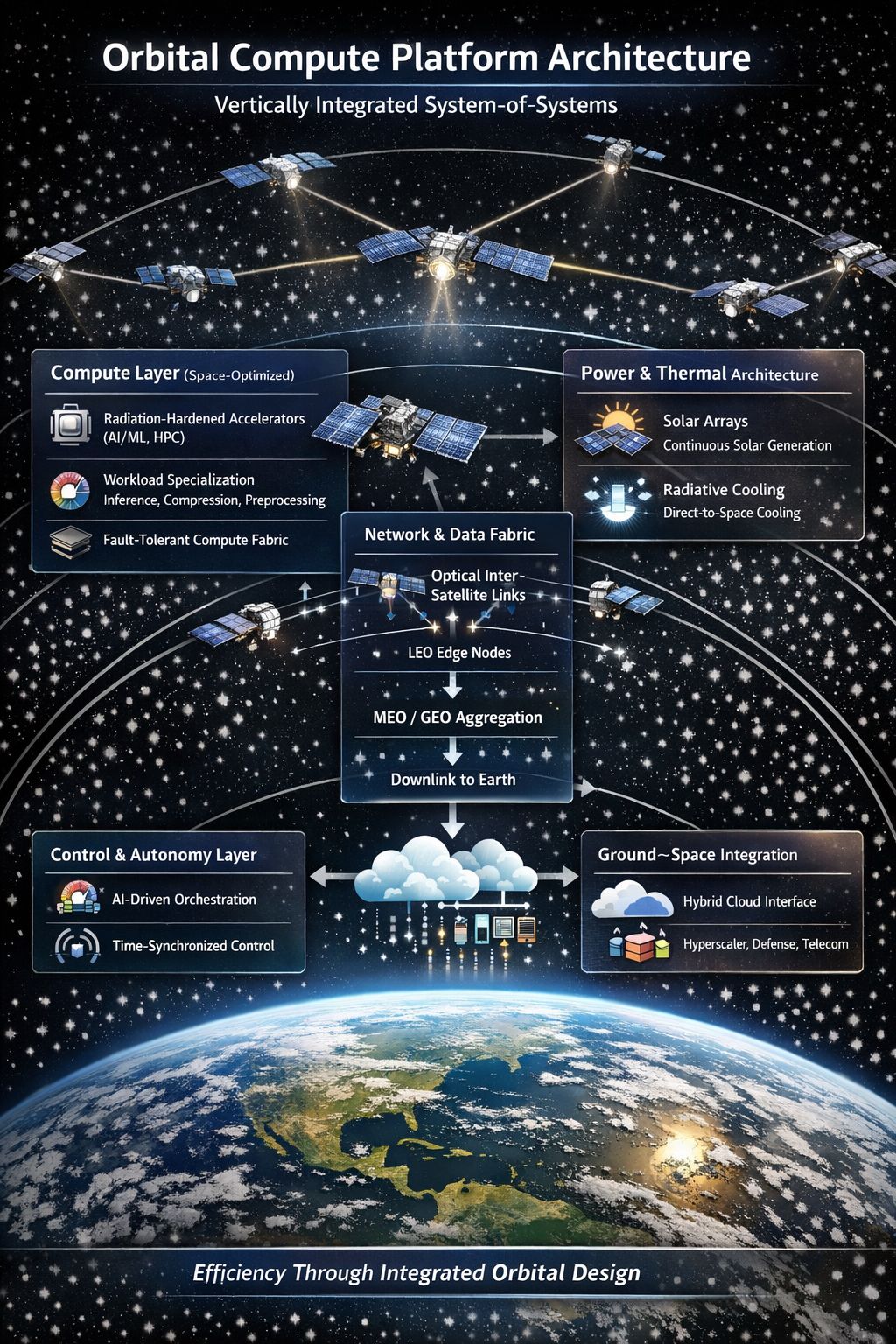
Infrastructure Platform Architecture, Designed for Orbital Compute Efficiency
As AI expands into space-based systems, governance extends into infrastructure design.
Orbital compute platforms are engineered as vertically integrated system-of-systems, where:
- Compute
- Power
- Thermal management
- Networking
- Autonomy
are co-designed as a unified architecture.
Core Architectural Framework
Space-Optimized Compute Layer
- Designed radiation-hardened compute environments for AI/ML and high-performance workloads
- Structured modular payloads for inference, compression, routing, and Earth observation preprocessing
- Integrated fault-tolerant, self-healing compute fabrics for graceful degradation
Power and Thermal Architecture
- Continuous solar energy generation aligned with orbital cycles
- Direct-to-space radiative cooling for thermal efficiency
- Power-aware scheduling that adapts to orbital position
Network and Data Fabric
- Optical inter-satellite links enabling low-latency mesh compute
- Hierarchical routing from LEO edge systems to MEO/GEO aggregation and terrestrial cloud
- In-orbit data reduction to optimize bandwidth usage
Control and Autonomy Layer
- AI-driven orchestration managing compute placement and system resilience
- Time-synchronized control systems integrating photonics and precision timing
Ground-Space Integration
- Orbital systems structured as a native extension of hybrid cloud environments
- API-based integration for hyperscalers, defense systems, climate modeling, and telecom infrastructure
Efficiency as a Structural Advantage
Orbital compute efficiency is achieved through intelligent placement of computation.
The model is clear:
- Space optimizes energy, cooling, and latency
- Earth retains training, storage, and governance
This creates a balanced system where each environment operates at its structural advantage.
Unified Perspective
AI governance and orbital infrastructure are part of the same evolution.
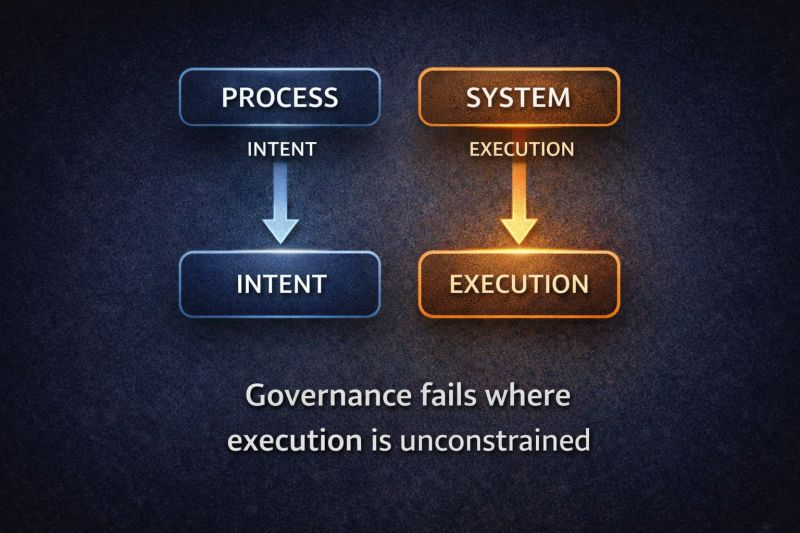
- Governance defines how decisions are controlled
- Infrastructure defines where and how systems operate
Together, they create:
A fully integrated system where intelligence is:
- Accountable
- Scalable
- Resilient
- Operational across environments